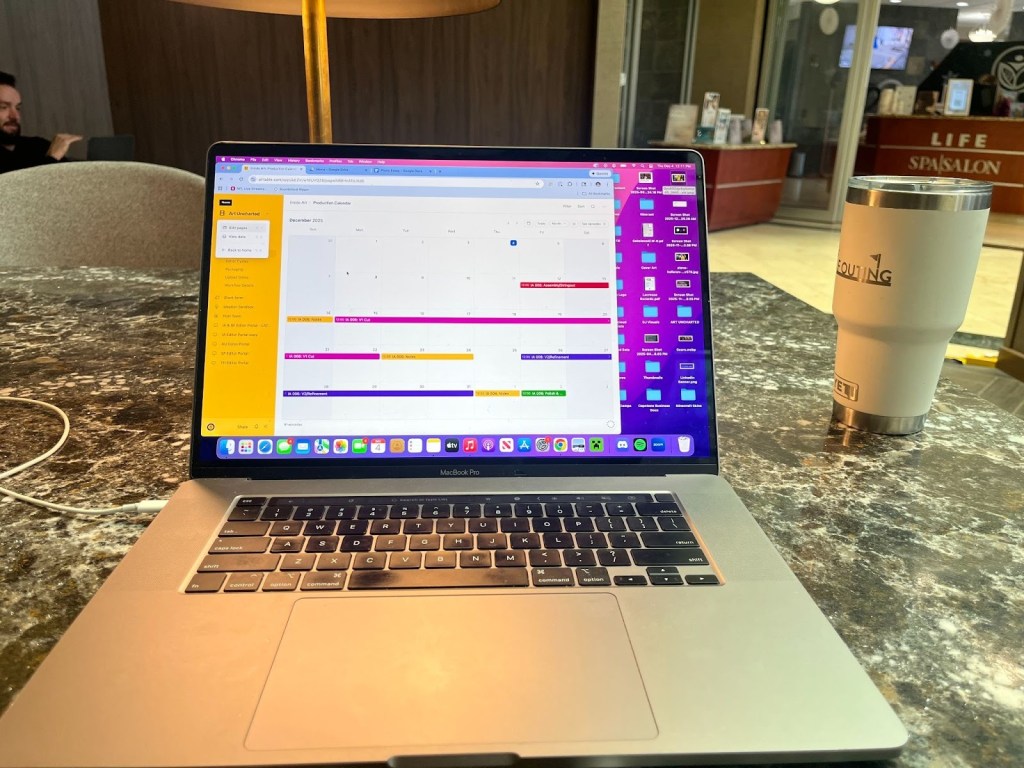
Welp. This is basically 80% of my existence in this photo. I know it’s only a laptop, sad, right? I don’t have a unique reality. Most of my generation spends the majority of their days looking at a screen. It seems like each year that goes by, we spend more and more time existing in digital spaces. In 2024, I had to learn the hard way that my relationship with technology was greatly limiting me…
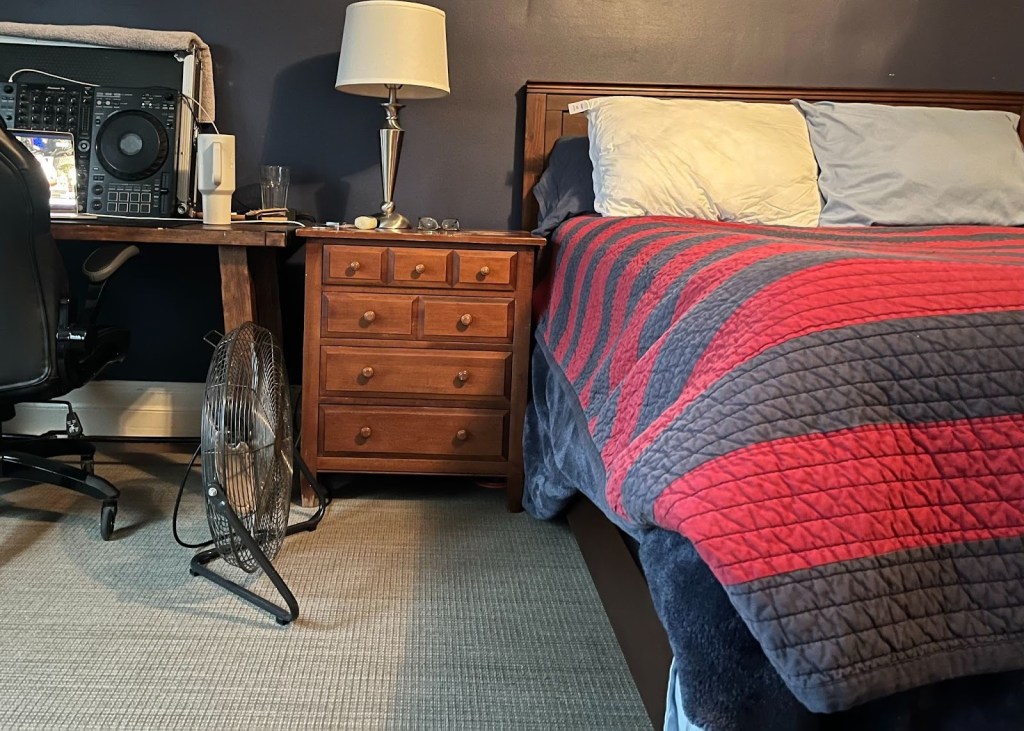
What I didn’t realize then is that my bed and my computer are only separated by the 3ft of the nightstand. The effect this had on me is that my human experience and digital requirements got completely blurred. What was meaningful to me felt completely lost. Our society used to, and many people still do, commute hours to work. I just roll over.
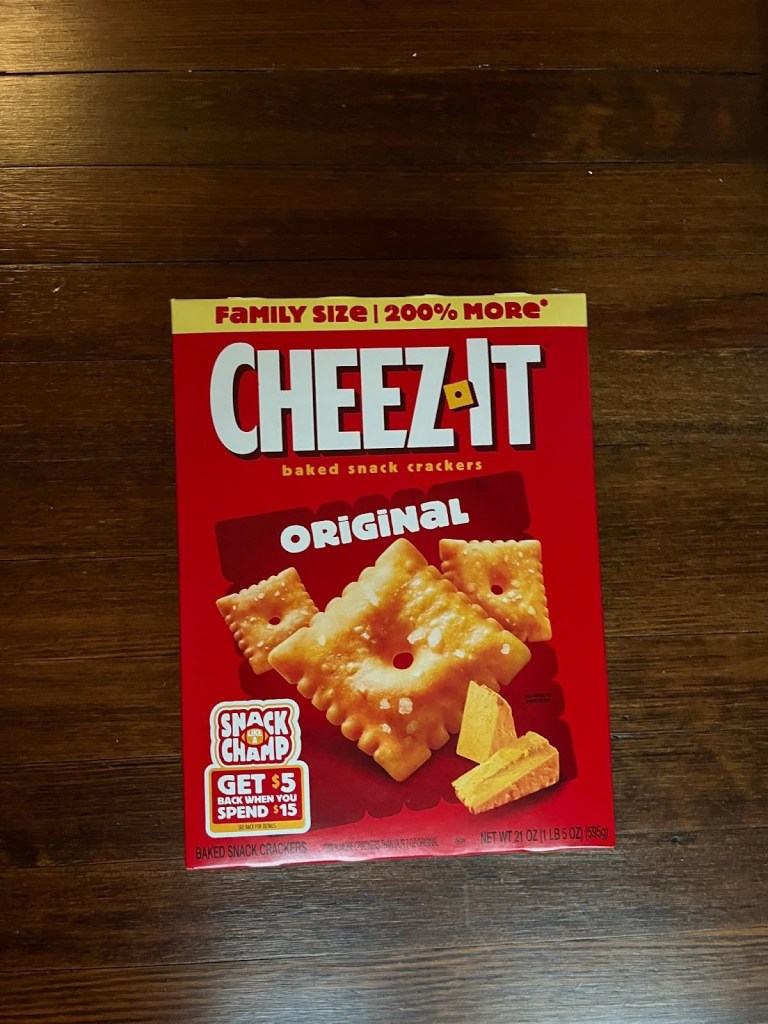
Now, what do cheese-its have to do with this? I love them. But here’s why they’re relevant to this story: when I find myself around great food, I consistently think about earlier times in history where access to incredible foods like this was rare. In America in 2025, whether you are wealthy or poor, we are inundated with abundance. What could be considered a delicacy in another era can now arrive at our front door.
With work feet away from bed and access to food no further away than my front door, sometimes it’s easy to forget there’s a whole world outside. Even leaving the house each day, it was easy to forget there is a whole world outside.
It feels comical for me to even write this, but sidewalks changed my life. It wasn’t until I began walking every day that I was able to get reintouch with the world outside of my window. Being able to separate myself from work and human necessities helps transition my awareness to a more global perspective. The same insignificant way I walk down the sidewalk is a reminder that everyone is moving through life on their own sidewalk. When I walk, I feel surrounded by all of the life I am entirely disconnected from at my desk.
So what’s next? What happens if the sidewalk runs out? The excitement of what can be waiting behind the door of discovery is all the more reason to keep moving forward. Whether it’s on a sidewalk or at a desk, I won’t stop moving through life until my last breath. There were many years of my life when I lost the “sidewalk,” but finding it has unlocked a new level to my creativity and new excitement for life that I would not have otherwise.
Reflection:
My first goal in writing this story was to identify a through-line for the hundreds of images I took throughout the previous week. Ultimately, in this essay, I aimed to describe how my environment shapes my perspective on the world. In The History of Visual Communication, Elif Ayiter writes, “writing is the essence of visual communication.” Without text to accompany these images, they would have meaning, but they would be disconnected and insignificant to the average viewer.
Part of the reason I chose to write this story was the theme I was able to identify. At the heart of my photo essay narrative is meaning and purpose. Richard Buday, author of The Reality of Design Fiction: How Storytelling Can Save the World, writes, “A story, also called a narrative, is an account of things that have happened, are happening, or will happen.” In my essay, I aimed to use photos to describe how meaning and purpose were lost and found in the confines of my environment. This, to me, fits Buday’s description of a narrative.
I tried to select images that both told a story with their contents, but also with their color. Based on my topic, this was easy to do. According to the author of 8 Ways to Use Color Psychology, Céillie Clark-Keane, color “evokes an emotional response in your audience, whether they realize it or not.” One of the primary differences in my photos was indoor and outdoor environments. The indoor images were less colorful and bland, while the outdoor images were filled with bright colors.
There were also a lot of different depth cues on display. One particularly important to supporting the narrative was Relative Size Relationship. I used a photo with a nightstand to display the distance between my bed and desk. The bed is much closer to the camera, so it is much larger in the photo than the other important items.
In addition to depth cues, Gestalt Principles also assisted the effective communication of the narrative. Specifically, I used the photo from inside the window looking at the sky relies on simplicity. In the frame of the window, the world is bright and colorful, while the walls inside are dark. This directs the eye to focus solely on what’s outside, accompanying the sentiment from the written narrative.
I didn’t really expect the Experience Economy to become relevant with my photo essay, but the understanding I gained from the article helped explain one of my photo choices. I used a photo of cheese-its to describe how our economy has yet again shifted. I’m no economic expert, but there definitely is a large chunk of people who are sacrificing experience for convenience. For my narrative, I felt like Cheez-its represented that shift from experience to convenience.
Overall, I enjoyed the challenge of creating a story out of my day-to-day experiences through photographing my week. If I were to publish or continue to iterate this story, I would definitely use some different images. I am not a good photographer and I think there are better suited visuals for the story. However, I really appreciate that this narrative is 100% me.
If you want to understand today’s complex media environment, a focus on what is fundamental to media is essential in understanding how and why humanity uses these tools. The History of Visual Communication claims it is “no overstatement when we say that writing is the essence of visual communication and by extension of visual communication design.” So if writing is the essence of visual communication, the real question is, what is the essence of writing?
Walter J. Ong, author of The Written Word, claims writing is a technology that reorganizes consciousness — separating words from the present moment. The key is that there is a separation from the present. For visual communication, this is no different. Whether it is a photo, an infographic, or another form of visualization, its creation separates it from the present, only achieving meaning if it is observed once more.
Something we’ve lost in the age of the internet is the ability to discern what moments are truly worthy of capturing. There’s no right or wrong moment; however, social media has driven us to simultaneously over-share and over-consume, blurring the lines of what is significant.
A seemingly terrible situation has created a smile. But why? This is a photo from Bonnaroo, a music festival in Knoxville, Tennessee. In 2025, the festival had to be cancelled due to heavy rain. That didn’t stop the fun! As you can see, this woman is surrounded by a sea of mud and a wall of mud-covered legs. The festival goers were able to share a moment of joy despite the bad news.
In the last photo, we looked at a moment that went from bad news to unexpected joy. This photo demonstrates a different perspective of what visualization is capable of. Whether you consider it a split second or an eternity, this surfer has redefined what is humanly possible. In perfect harmony with his board, he defies gravity and floats above the waves.
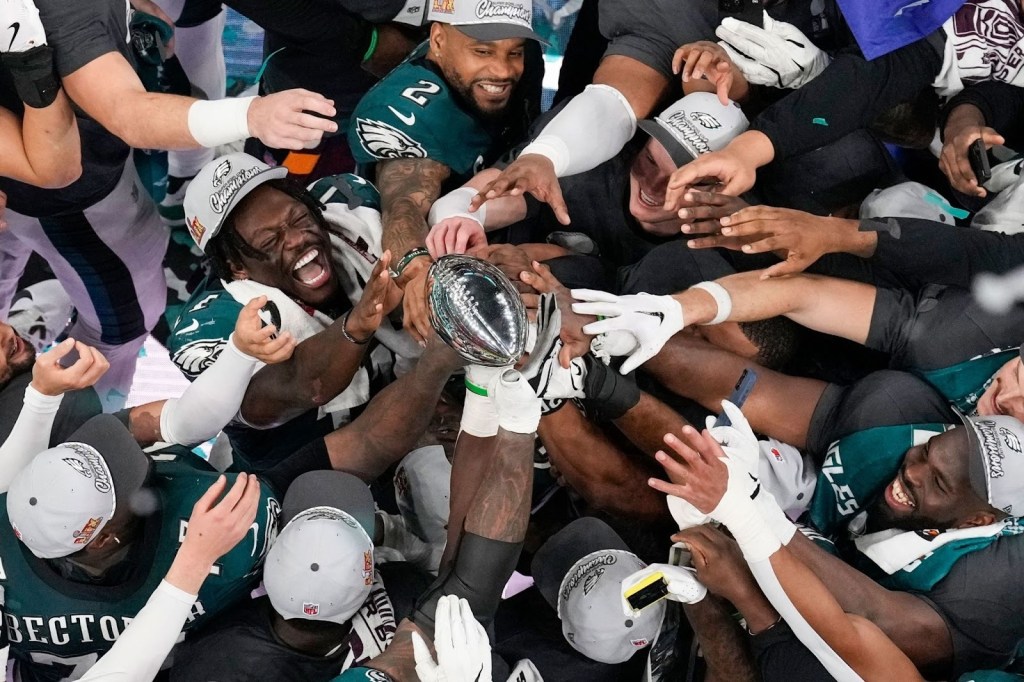
In professional football, the journey to winning the Super Bowl is commonly compared to climbing Mount Everest. The season is far too long with far too many ups and downs for everything to go to plan. To make it to the top of the mountain is nothing short of a miracle. The mere existence of this photograph is a testament to that truth. The joy within this photo is undeniable, and every arm is outstretched to get their first touch of the top.
This is the first photo in the collection that doesn’t appear to be entirely candid, but does that remove its value? Absolutely not. This photograph has the strongest sense of character in the group. Mike Montalto, a design and storytelling expert, claims that characters are 1 of the 4 principles of visual storytelling. Montalto writes, “Remember, stories that make an impression feature memorable characters readers and viewers can identify with.” To me, the sense of individuality that is expressed through the character in this image jumps off the screen.
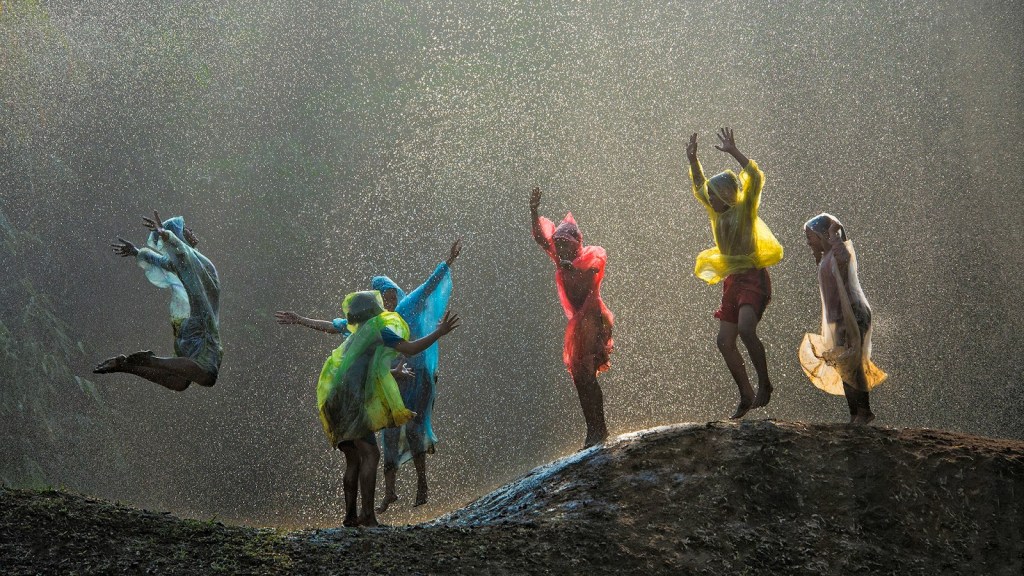
Once again, the question of authenticity is invoked by this photograph. The number one thing that indicates is the color selection of each poncho. Each poncho is its own, just like the children who wear them. This is a representation of an ideal reality. The absence of color in the background and foreground of the photo surrounds the colorful joy of the children and emphasizes their importance.
Here we have another demonstration of the importance of context that can be provided through examining the background and foreground. Up close, the volcano is powerful and dangerous. But in the context of the stars in the sky, it is merely a small part of the earth, just like the trees it stands next to.
We examined humans and nature through photography, but what can these penguins teach us? The moments experienced by these animals are just as significant as those in human life. However, the penguins, and nearly all animals for that matter, will not get to experience observing the photograph.
Humans, as the controllers of this powerful visualization technology, have a responsibility to document animals as a time capsule to exhibit who and what we share this life with.
In 2024, practically every waking second, we have access to life-changing information thanks to advances in technology. Yet our pursuit of deep understanding is often forgotten due to the profit-focused design of media technology. Perhaps the most common design quality of media technologies are systems that incite repeated use of the product. Streaming platforms and social media use, for example, are commonly described as ‘binge-watching’ and ‘doomscrolling’, respectively. This discourse exposes the focus of the technology’s design on capturing the attention of its users.
A.J Liebing, a journalist for The New Yorker from 1935 to 1963, has powerful perspectives on life and sport that can help us better understand the potentials of media as technology grows stronger. In an essay for The New Yorker on boxing, Liebling reflects, “Mr. Matthews, who was the editor of Time, said the most important thing in journalism is not reporting but communication. ‘What are you going to communicate?’ I asked him. ‘The most important thing,’ he said, ‘is the man on one end of the circuit saying ‘My god, I’m alive! You’re alive!’ And the fellow on the other end, receiving his message, saying ‘My God, you’re right! We’re both alive!’” Mr. Mattews defines the ultimate power of communication as a shared acknowledgment of existence. Although it exists today, it would be hard to find evidence within our technology’s design that enforces the pursuit of creating a deep understanding of life.
Examining visual storytelling and the human experience can help us predict how to create more powerful content in the future and create meaningful connections regardless of the technological design. Particularly, using Liebing perspective, sports media will be focus for where and how media can deepen our understanding of life.
Ways of Seeing
In my final year of undergrad at Muhlenberg College, I was exposed to something that would change my life… ways of seeing. My professor for my senior Communications seminar, Jefferson Pooley, taught us the history of communications in such a manner that it quite literally changed how I see the world. What captured my imagination was how he described the interconnectedness of all media forms. I was fascinated by this concept that a new form of media not only created new unimagined possibilities but it also changes the function of old forms of media. One of the simplest way to understand this is through the introduction of writing as a medium.
Imagine a world with no writing, just thought and speech. How would we think? How would we sound? There isn’t a specific correct answer. But, what we do know is how writing went on to change thought and speech. The introduction of writing created an increased amount structure for language. Imagine what your stream of consciousness would be like without following traditional syntaxes of writing. What would be the ordering of words? What’s important to say first? There became a clear set of rules to dictate all language. It also significantly changed our relationship with memory. It no longer became as important to recall specific details because they could be written down and stored for later use.
It would be a challenge to detail the interconnectedness of all media types from a holistic perspective. What is so important about understanding this relationship between different media types is the clarity that each is its own tool of understanding. Thought, writing, photography, video, painting, etc, are all their own tools for understanding. Using that perspective, an individual’s way of seeing becomes much easier to comprehend and accept. Perhaps we should not judge someone’s intelligence solely based on what they know, but rather how they use media as a tool of understanding.
Media Emulating our Minds
Oriented as visual creatures, visual media has grown to dominate the world (here). As it has grown and technological advancements have made it more accessible, these tools for understanding have transitioned to consumable products with a focus on capturing the user’s attention for profit. We can see the negative impacts that this transition has created through things like the rise of mental illness (here). One of the best ways we can prepare for a better future is to realign our societal understanding of media with the notion that media is a tool for understanding.
Although corporations may misguide our uses of visual media at times, the depth of our understanding of visual forms maintains a high level. For example, professor of Science Communication, Lloyd Spencer Davis, writes “communicators can become more effective visual communicators if they incorporate elements of theory and practice from the discipline of design.” The application of design elements has proved to increase the effectiveness of visual communication. However, what makes visual most incredible can be described by David Griffin, director of photography at National Geographic.
“Photography carries a power that holds up under the relentless swirl of today’s saturated media world because photographs emulate the way that our mind freezes a significant moment.”
Griffin’s perspective on photography is particularly powerful because of this sentiment: “Photographs emulate the way that our mind freezes a significant moment.” By speculating how other forms of visual media can emulate our mind like photography, it will become more clear how we can best use media as tools for understanding in the future.
Unfortunately, Griffin’s argument is specific to photography. So what about a more powerful technology like a television broadcast? What I first assumed is that it would emulate our minds in more ways. However, what is crucial to understand is the exponential increase of information from video to photography. Simply, it is more challenging to comprehend video because there is more information to process. The increase of information makes it necessary for videos to be structured in an organized manner that limits subjectivity, thus limiting the ability of video to emulate our experiences.
Humans have a strange attraction towards objectivity as if it holds some ultimate form of truth. In reality, however, objectivity is only a piece of truth, the same way that subjectivity is only a piece of the truth.
Phenomenology
The past and future of visual storytelling have many parallels to the study of science. Just as visual media has relied on objectivity to foster common understanding, so has science, and thus, it has come to limit overall understanding. An increased focus on phenomenological research, “the study of structures of consciousness as experienced from the first-person point of view”, will create more balance in the perspective of our research, and enable more powerful storytelling in the future.
What is most important in the give-and-take relationship of objectivity and subjectivity is that neither goes overlooked. Robert Gugutzer, author of Strength as Phenomenon: A Pure Phenomenology of Sport, highlights this importance through the study of strength. Gugutzer writes, “The reductionism of science, especially natural science, should be criticized from a phenomenological point of view, because it leads to phenomena of significance to the lifeworld being overlooked or ignored.” The general argument by Gugutzer is that the study of strength has been limited to a biomechanic perspective when in reality, it encompasses a lot more.
By creating visual experiences that focus on highlighting phenomenological lifeworld experience the reductionist nature of science and visual media can be avoided. One of the biggest critiques of pursuing subjective understandings is that it leads to differentiated analysis from the same set of information.
If media is best used as a tool for understanding, and visual forms like photography are powerful because they emulate our minds, then how can we use more powerful visual forms to emulate our minds? The answer is to reduce the pursuit of objective understanding. Gugutzer writes, “It is useful to recognize where, how, when, why, and in what way I have experiences of strength in sport, and above all which of them I do and do not like, because it contributes to self-knowledge, or rather it is self-knowledge.” To increase the overall potential of visual media, a higher focus on phenomenological experience, and limiting the focus on objectivity, will help visual media be more commonly used as a tool for understanding.
Combining Phenomenology and Visualization
The power of pursuing subjective information can be best described by Charles Duhigg, a communications expert. Duhigg breaks down conversation into three separate categories to detail the framework of “The Matching Principle”. The Matching Principle states that in order to connect with someone, you need to be having the same kind of conversation at the same time. The three conversation types are social (who we are), practical (what we are), and emotional (how we are).
Duhigg’s primary argument is that we connect at a higher level and learn more about each other when we have emotional conversations. Yet, this is contrary to science-focused disciplines because it is not founded on objectivity. Traditional media channels focus their content on social and practical conversation because it is easier to achieve an objective understanding.
Powerful visual media is oftentimes viewed as a substitute for experience. For example, if you are unable to attend a sporting event, it can be watched on TV. However, the production of television is not focused on lived experiences because it pursues objectivity. Thus, it limits visual media’s ability to emulate human experiences. Photography can emulate the way our mind captures a moment, but if the subjective nature of experience is not explored within more complex forms, how could it emulate our experience?
The reality is that visual media is a significantly inferior good to true experience. However, by increasing the focus on detailing phenomenological experiences and sharing emotional conversation the potential of visual media as a tool for understanding will increase.
Liebing’s Way of Seeing
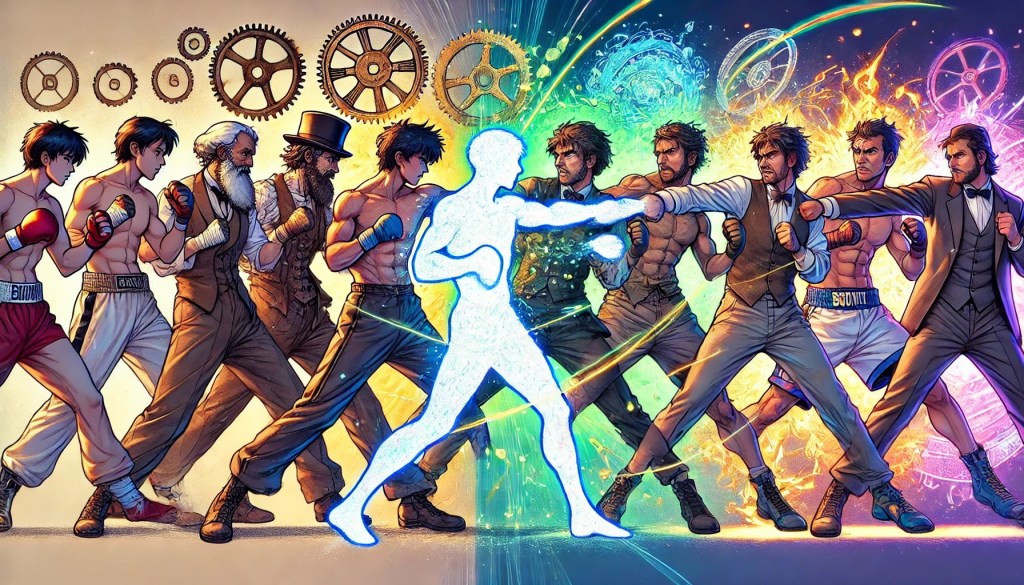
Liebling offers quite a fascinating perspective on the television because he knows a world without it. A passion for sport and a clear disdain for television, make it clear that Liebling’s way of seeing is vastly different than those who have been exposed to more powerful media technology. For example, a world without visualization technologies would likely have higher levels of visual descriptions within writing. Liebling introduces an understanding of boxing through his own lived experience: “It is through Jack O’Brien, the Arbiter Elegantiarum Philadelphiae, that I trace my rapport with the historic past through the laying-on of hands. He hit me, for pedagogical example, and he had been hit by the great Bob Fitzsimmons, from whom he won the light-heavyweight title in 1906. Jack had a scar to show for it. Fitzsimmons had been hit by Corbett, Corbett by John L. Sullivan, he by Paddy Ryan, with the bare knuckles, and Ryan by Joe Goss, his predecessor, who as a young man had felt the fist of the great Jem Mace. It is a great thrill to feel that all that separates you from the early Victorians is a series of punches on the nose.” My imagination was immediately captured by this description because I had never been exposed to a historical understanding that was so clear and simultaneously founded within a present experience. If more powerful visualization technologies existed, it would not have been necessary for Liebling to create textual imagery for the audience.
As a mini experiment, I wanted to combine Liebling’s old-school perspective with the power of AI to see what happens when generationally different ways of seeing are combined.
There is no doubt that the visual could still use refinement and it doesn’t follow the text’s details word for word. However, by focusing on a phenomenological experience, a deeper insight into Liebling’s world is gained. By representing a lived experience through fictional depictions (using AI), we maintain a higher ability to use both pieces of media as tools for discovery.
Finally, examining Liebling’s way of seeing offers a subjective perspective that can help us understand that visual technologies are inferior good to lived experience. He writes, “I had seen his two bouts with Jersey Joe Walcott on television, but there hadn’t been any fun in it. Those had been held in public places, naturally, and I could have gone, but television gives you so plausible an adumbration of a fight, for nothing, that you feel it would be extravagant to pay your way in. It is like the potato, which is only a succedaneum for something decent to eat but which, once introduced to Ireland, proved to be so cheap that the peasants gave up their grain-and-meat diet in favor of it.” Although we may commonly use the word ‘potato’ to describe poor technology in 2024, Liebling’s use in the 1950s was way ahead of its time. Not only does television decrease lived experience, but it also decreases our pursuit of powerful experiences because it is viewed as a substitute.
Rather than creating a mutual exclusivity between technology and lived experiences through the pursuit of objectivity, technology should be used to highlight subjective and phenomenological experiences to increase media’s ability to emulate our minds and increase our ability to use media as tools for understanding.








 Getting to Know Stolen Focus