• About
    • All posts

Getting to Know Stolen Focus

  • The Paratext Takeover: How Titles & Thumbnails Are Quietly Dominating the Media Industry

    December 14th, 2025

    Intro

    Before anyone opens a book, presses play on a movie, or watches content on a social platform, they encounter the title and the thumbnail. This is not an accident. Book covers, movie posters, and cover images are not simply decorations for products; they are the most critical part of the user experience. They decide whether anything that follows will be seen at all.

    Titles and thumbnails can best be understood in this context as a doorway or portal. If no one reads your book, does it matter how good it is? If no one watches your movie, can it inspire the audience? If you have a great product, but no one uses it, is it great? If a tree falls in the woods and no one sees it… I think you get the point. In this sense, titles and thumbnails are the pathway to existence. They are the pathway to reverence.

    Over the past several decades, these doorways have transitioned from static promotional materials to a key design tool in the attention economy, mediating not only how audiences interact with your product, but whether they encounter it at all. This essay will examine title and thumbnails across different media industries (books, streaming, social media, and video games) to explain how our current media environment has reached a point where the surface-level matters just as much as the content beneath it.

    Paratexts

    In order to discuss how titles and thumbnails truly function, we need to look at media studies. Gérard Genette, a French literary critic, coined the term paratext. In literature, a paratext is defined as the surrounding material of a book that shapes how readers understand and engage with the work. More importantly, Genette breaks down this relationship into two categories.

    Epitext: This includes paratexts that are not directly attached to the body of work. For example, this could be advertisements or critical articles. An epitext is a paratext, but the distinction is that it is disconnected.

    Paritext: This includes paratexts that are attached to the body of work. For example, titles, author’s notes, cover art, etc. These elements exist as a direct element of the product. 

    Investigating how paratexts are being used across different media industries reveals one primary insight. Paratexts are not merely for design and marketing; they are a central tool to help us translate complex products into something immediately comprehensible. Literary critic Cornelia Klecker writes this about Genette’s research: “The most important conclusion is that the paratext changes the text itself because it establishes a relationship between the sender, i.e. the author, editor, or publisher, and the receiver, i.e. the reading public.” 

    This relationship almost always begins as a visual one, so in order to move forward, we must understand what visual communication is. The History of Visual Communication claims it is “no overstatement when we say that writing is the essence of visual communication and by extension of visual communication design.” In the context of paratexts, the goal of visual communication is to translate a product into comprehensible language.

    Another crucial definition to understand is design. What is design? Richard Buday writes, “Design, by definition, contemplates what does not exist.” Meaning, to design a proper paratext, we have to translate what does not exist into comprehensible language. That sounds like a much higher mountain to climb than “design me a title and thumbnail.” At the highest level, designers should aim to use multisensory design to trigger the desired effect while communicating language that properly encapsulates the product.

    Books
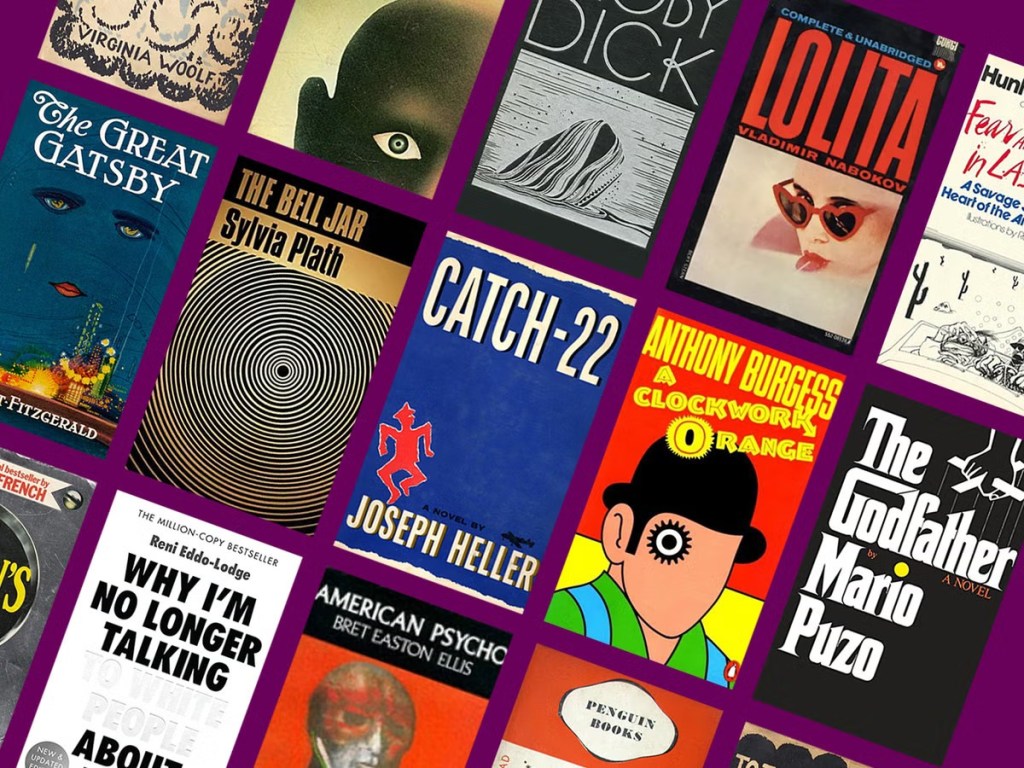
    Figure 1.1

    Don’t judge a book by its cover. It’s a sentiment that makes a lot of sense. How could you possibly know what the contents of a book are without reading it? While true, this question is greatly misleading because it assumes the cover is not a part of the book itself. Based on what we know about paratexts, this is not true. 

    In 2024 creative director of Forbes Books, David Taylor, wrote, “While many advise against judging a book by its cover, the book cover design is the gateway to its universe.” The cover is not disconnected from the text; it is an integral part of it. Taylor continues, “An effective cover design bridges the gap between the content of the book and its potential audience.” In other words, the cover is where a book’s ideas are compressed into a singular point of contact. Let’s take a look at two key tools in cover design: Typography and Gestalt Principles.

    Design expert Grace Fussel writes this about typography: “Because human beings respond to visual culture in an emotional way, designers can manipulate the psychological responses of their viewers by making informed choices about the features of a design, such as colors and fonts.” But it goes far beyond that in the context of the actual body of work. The cover directly impacts how you understand the text that the cover contains. Taylor writes, “The font, style, and placement of text contribute to the overall visual narrative, and all influence the voice, tone, and visual appearance of the book.” Not only will design choices impact the overall marketing/sales of the book, but also how readers understand and perceive the author’s voice and tone. 

    Book covers are essentially small exercises in perceptual psychology. Gestalt principles are another element of design that has a significant impact on the paratext as a whole. Examples of these principles are proximity, similarity, figure–ground, and closure. Using these principles to inform design choices ultimately determines what the viewer notices first, what feels important, and how quickly the viewer can come to an understanding about the book. 

    While design choices are not limited to these two categories, the relationship between Gestalt structure and type choices is key in what enables a book cover to instantaneously communicate, “this is a thriller,” “this is a memoir,” or “this is a productivity handbook” before a single page is turned.

    As we progress through paratexts in different media industries, it will become clear that paratexts have an increased importance in digital spaces. This is true for books as well. Taylor writes, “In the digital realm, there are fewer seconds to capture a buyer’s attention. This elevates the need for captivating thumbnail imagery, arguably making it the most important version of the cover.”

    Movies

    Figure 1.2

    Cornelia Klecker’s 2015 study of paratexts in film makes a key reference to “framing”, a concept defined by Gale L. MacLachlan and Ian Reid in their research Framing and Interpretation. Not only is their definition crucial to understanding paratexts in film, but also the broader media industry.

    [Frames are] “basic orientational aids that help us to navigate through our experiential universe, inform our cognitive activities and generally function as preconditions of interpretation. As such, frames also control the framed . . . frames are keys to abstract knowledge, to communication and pragmatic situations, but also to what is most interesting in the present context, namely to the understanding of literature and other media.”

    -Gale L. MacLachlan and Ian Reid (2006)

    Framing is a foundational pillar of what a paratext ultimately is. Which begs the question, what framing strategies help trigger the desired viewer response?

    The truth is, research in this space is too limited to fully understand, and to make matters worse, the movie industry is in a transitional stage that is completely altering the function of paratexts within the industry. In 2025, we are far along in a transition from the consumption of films in movie theaters to streaming movies at home. There’s one key difference in the crossover to the digital age between movies and books. Book covers are paritexts, whereas the traditional movie poster meets Genette’s definition of an epitexts. A movie poster impacts how viewers will understand the body of work, but it is not physically connected to the content. For example, you could watch a movie without ever seeing the movie poster, but you can’t read a book without coming in contact with the cover. 
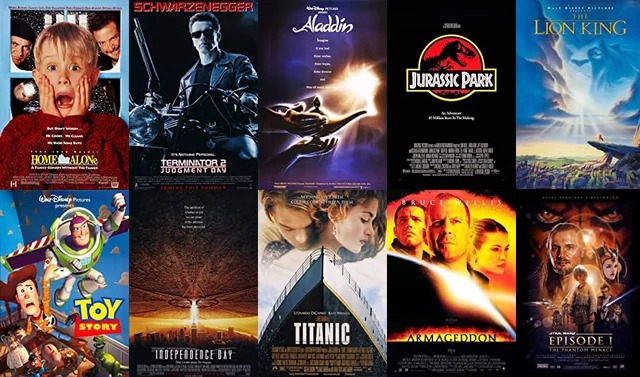
    Figure 1.3

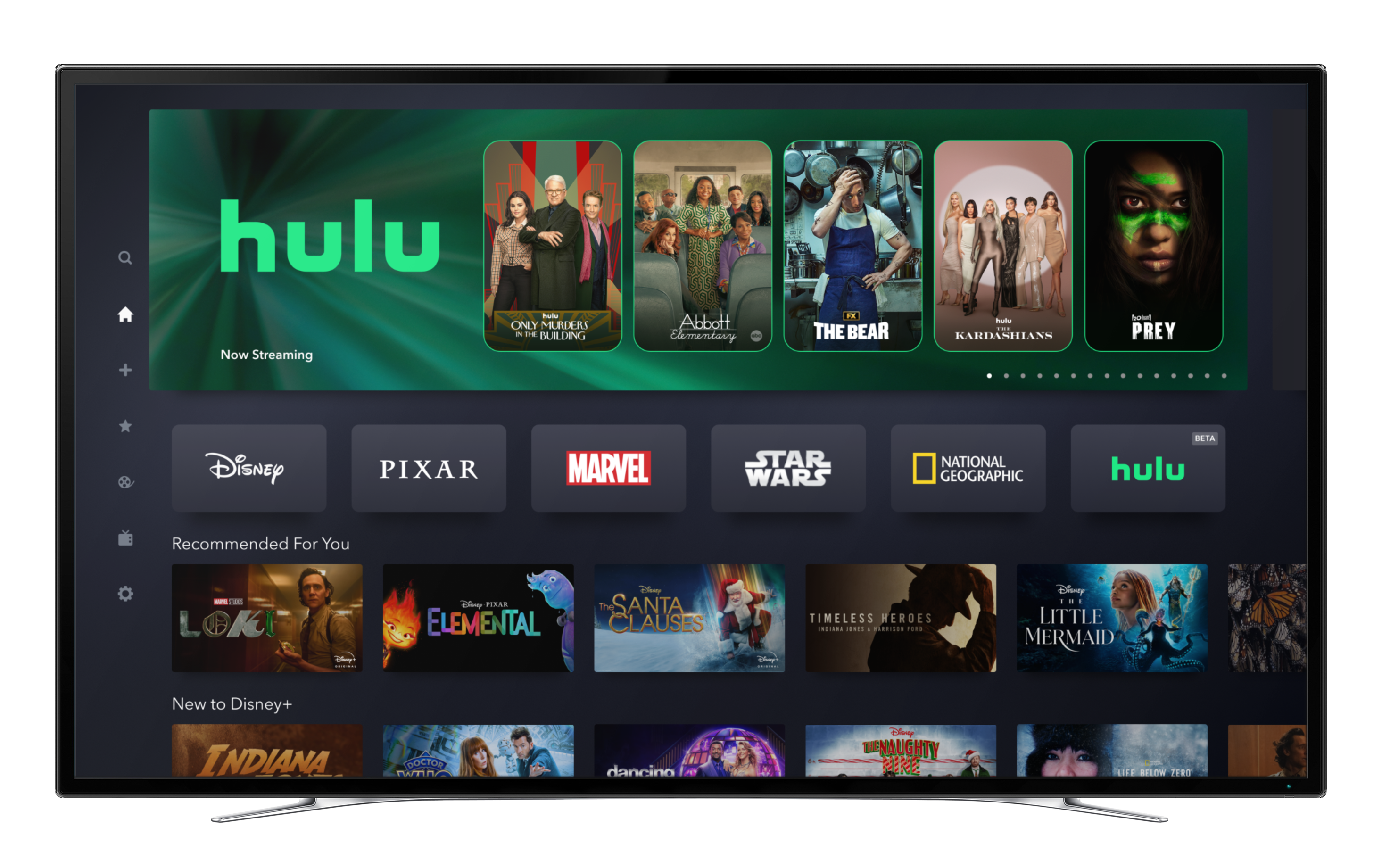
    The transition of movies from physical to digital media inadvertently transitioned the function of paratexts in movies. On streaming platforms, to watch a movie, you must interact with a title and thumbnail before you access the content. This foundational change makes the digital age movie poster transition from an epitext to a paritext. It is an interactive piece of the product that is directly a part of it.
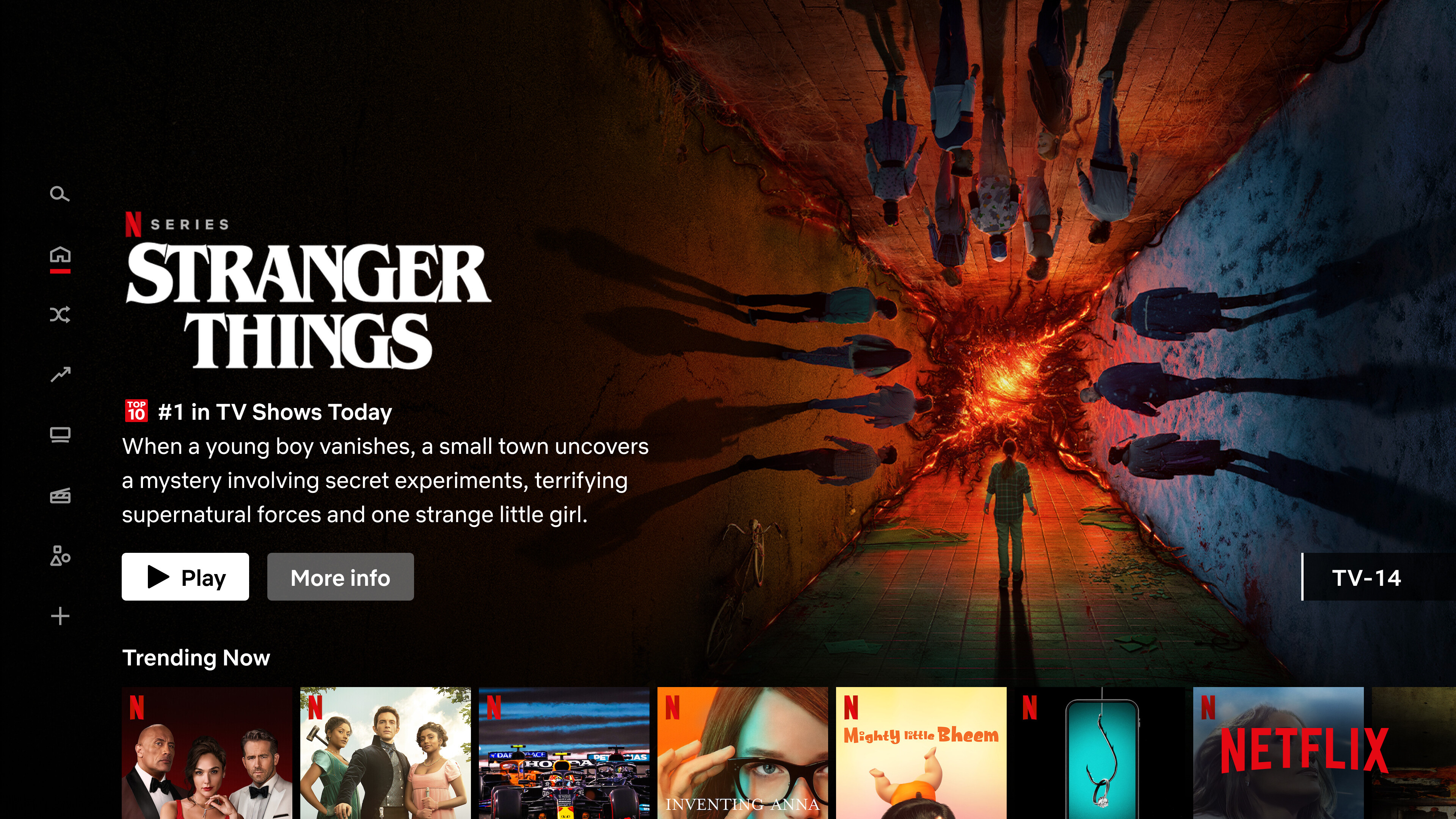
    • Figure 1.4-1.6

    The shift from physical to digital media also made data collection on how viewers actually interact with paratexts highly lucrative. Netflix, for example, personalizes paratexts to cater to each user’s desires. In 2022, Oliver Eklund wrote about Netflix’s thumbnail strategy. Eklund writes, “Netflix employs a range of thumbnails for each title, which they target to members,

    and use to convey different ideas about the title. In the process, Netflix also conveys an idea of itself to viewers, often a mirrored image of what users have already expressed an interest in.” Not only is Netflix engaged in attempting to master paratexts, but their strategy indicates that they are only serving previously expressed interest. This reveals a dark nature of how paratexts could be used to impact the larger media industry. Content on these platforms becomes boxed in to only be variations on what has previously been produced. Eklund marks this as a societal change as well: “The findings on thumbnail personalisation reflect a markedly different environment from the mass-produced paratextual appeals of DVD and Blu-ray covers, illustrative of the social implications of the shift from mass to automated culture.” It is scary to imagine what a world with a fully automated culture controlled by corporations would look like. Nevertheless, that is the direction we are barreling towards.

    Video Games

    Video games experienced a similar transition of paratexts as movies did. In 2025, nearly every video game being played is downloaded content. But it wasn’t always like this. For the first two decades that video games were around, a physical disk or cartridge was required to play a game. It would come in a case, much like a DVD with carefully designed packaging. 

    Figure 1.7

    Paratexts in video games came to be known as incredibly powerful. These paratexts were not always used responsibly. A 2012 study on video game box art found that “there is an economic motive for the marginalization and sexualization of women in video game box art, and that there is greater audience exposure to these stereotypical depictions than to alternative depictions because of their positive relationship to sales.” Tomb Raider is one of the best-known video game franchises that launched into a multimedia franchise with movies, comics, animated series, and merchandise. The game’s rise to prominence is largely attributed to the sexualization of a female protagonist as the main character, eventually rebranding in 2013 to a more relatable and human character. Although unethical, this ultimately displays how powerful an epitext can be. Without the epitext first capturing the imagination of an audience, would this game have ever become a franchise?

    Figure 1.8

    This is the evolution of Lara Croft’s character design, the main character in Tomb Raider. 

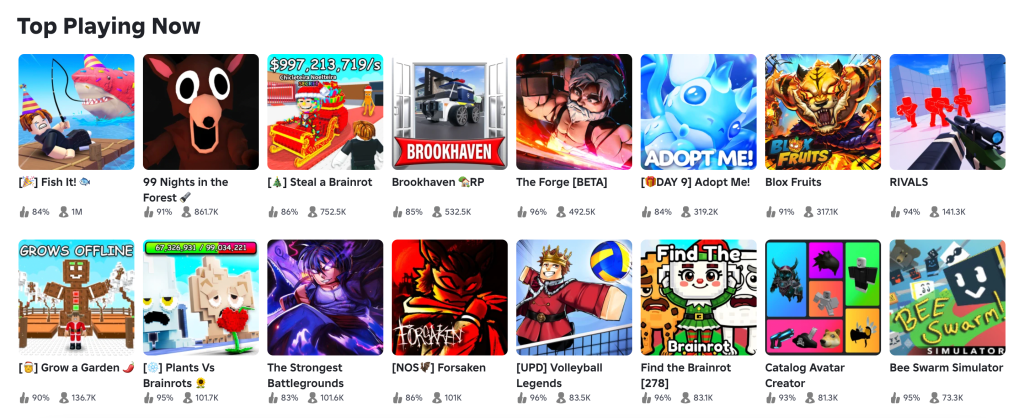
    As stated, video games and movies are currently seeing a similar transition from epitexts and paritext. This could not be more apparent than by looking at how the two largest crossplay gaming platforms, Fortnite and Roblox, are using paratexts. 
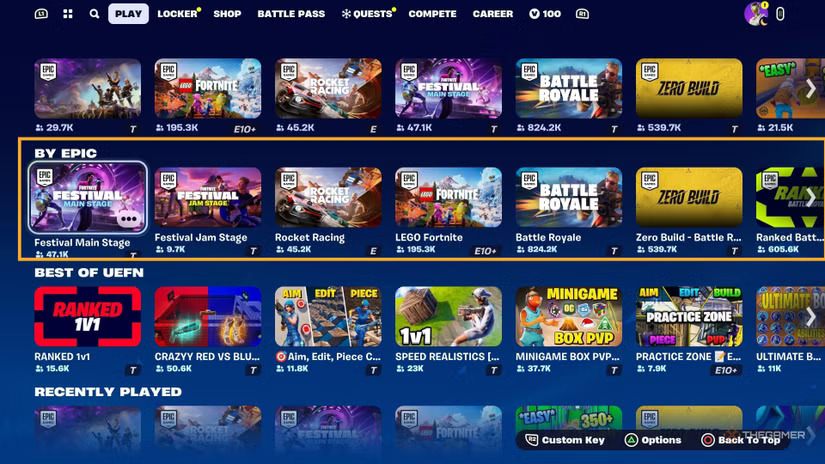
    • Figure 1.9-1.10

    The difference between how users navigate platforms like Netflix and Disney+ is strikingly similar to the way video game platforms are developing. Like Eklund’s concern with the streaming industry, this should serve as a caution that automated culture is on the rise.  

    Social Media

    Eklund’s criticism of thumbnail personalization takes a positive turn if you consider that personalization in conjunction with user-generated content. Jennifer Lane defines user-generated content as “any type of content that is created and shared by users, rather than by brands or companies.” Paratexts being created directly by users and not corporations drastically broaden what topics are deemed valuable. This is because users are not bound to the same constraints as corporations. This is not to say that social media platforms aren’t subject to creating an automated culture just like the streaming industry, but there is a creative freedom that is simply not possible elsewhere. 

    The importance of the paratexts on social media platforms is perhaps the greatest of the media we’ve examined thus far. Books and movies are clearly defined pieces of media. But YouTube, for example, is much broader than that. Imagine if you walked into a bookstore, and instead of books, the shelves were filled with anything that has text on it. We can call it a Wordstore. This is what YouTube is like, but instead of words, it’s video. 

    YouTube has 2.7 billion (2024) monthly active users with 500 hours of content uploaded every minute. With that massive user base and high volume of uploads, it creates a highly competitive environment. This indicates how important it is to focus on the title and thumbnail during the production process. Much like books, the portal to your content is the most essential part of it, because if no one clicks, no one watches. YouTube experts Colin and Samir claim creators “have to live 75% towards distributor” when considering the balance between artistry and distribution as a creator. In other words, the title and thumbnail of the video are just as important as the art that it contains
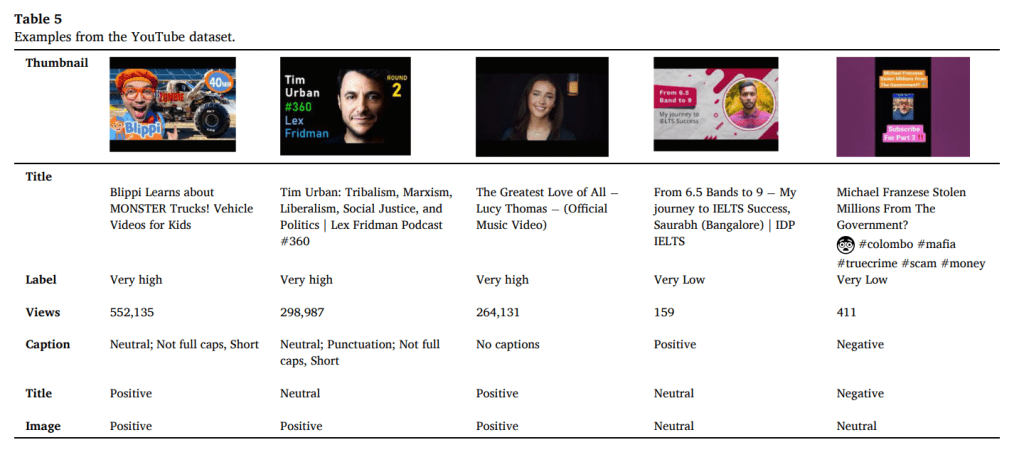
    F

    The image above is from a 2024 study, “Clicks for money: Predicting video views through a sentiment analysis of titles and thumbnails”, where researchers examined 16,000+ thumbnails. The study “reveals that strong sentiments in thumbnails, whether positive or negative, lead to more views” and that “Video titles with positive rather than negative sentiments generate more views. Sentiment markers such as punctuation, all capitals, and emoticons all contribute to more clicks.” Though simple, these findings illustrate that triggering emotions at the right time and place leads to more engagement. But this is nowhere near a perfect system; understanding what works does not guarantee success. Ultimately, the audience will always decide what works best through what they choose to click. 

    To combat the unpredictability of paratexts, YouTube added a feature called A/B testing. This allows creators to publish two different thumbnails for one piece of content. YouTube then tests the thumbnails within your audience, and after 60 minutes, the thumbnail that leads to the highest retention rate for viewers will be set as the official thumbnail. The mere existence of A/B testing is proof that the psychology of decision-making is still too complex for us to understand. Certainly, we can create thumbnails that ‘work’ or perform to the level we want, but can you determine a superior design? No.

    Even though paratexts on social media platforms have a high degree of unpredictability, there are still best practices to follow, and specialists who make a full-time living off of thumbnail design. For example, Thumbnail expert David Ch, created the table below as a set of simple guidelines to follow.
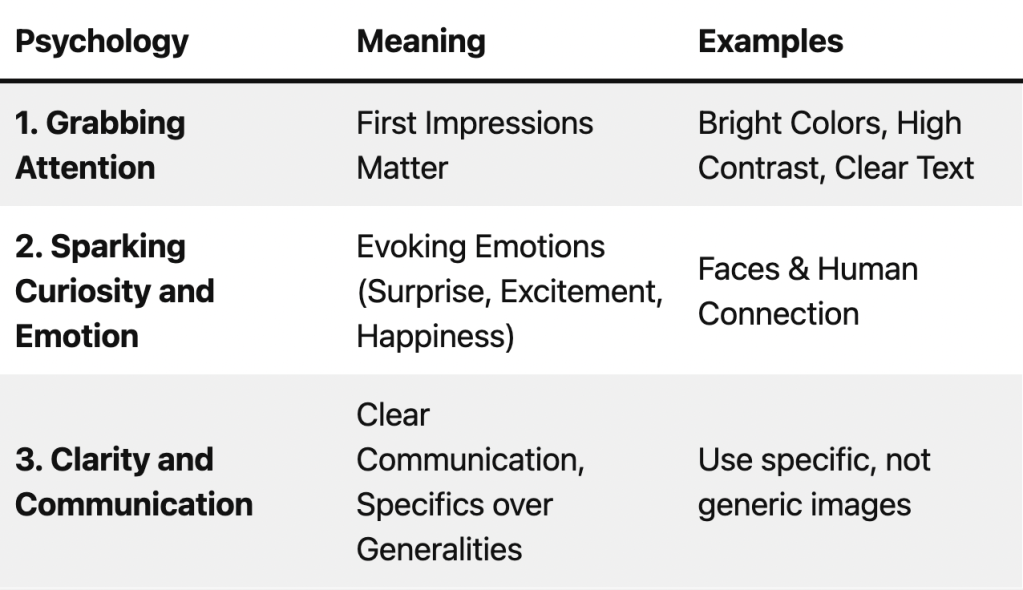
    If you can follow these three steps while delivering what the paratext promises will be in the video, YouTube’s algorithm will have a higher level of success finding the right audience for your video. This is what makes paritexts so unique: on social platforms, the title and thumbnail don’t just advertise the work, they negotiate the viewer’s decision in real time. An emotional cue, a promise, and a framing device all at once. When the negotiation is clear, viewers click and stay. When it’s misleading, the portal shuts just as quickly as it opens.

    Conclusion

    Across books, films, video games, and social platforms, titles and thumbnails function less like decoration and more like thresholds. Genette’s idea of paratext helps explain why. These surface-level elements don’t sit outside the work; they are a living part of it. Ultimately, the doorway metaphor holds true. In the attention economy, the surface is not separate from the content beneath it. It’s the condition for the content’s existence and a pathway to (hopefully new) discovery. 

    Works Cited

    Ch, D. (2025, January 6). Psychology of YouTube thumbnails: Explained (2025). ThumbnailTest. https://thumbnailtest.com/guides/psychology-of-youtube-thumbnails/

    Cui, G., Chung, S. Y.-H., Peng, L., & Wang, Q. (2024). Clicks for money: Predicting video views through a sentiment analysis of titles and thumbnails. Journal of Business Research, 183, 114849. https://doi.org/10.1016/j.jbusres.2024.114849

    Eklund, O. (2022). Custom thumbnails: The changing face of personalisation strategies on Netflix. Convergence: The International Journal of Research into New Media Technologies, 28(3), 737–760. https://doi.org/10.1177/13548565211064520

    Gale L. MacLachlan and Ian Reid, Framing and Interpretation (Carlton: Melbourne University Press, 1994); Werner Wolf, “Introduction: Frames, Framings and Framing Borders in Literature and Other Media,” in Framing Borders in Literature and Other Media, ed. Werner Wolf and Walter Bernhart (Amsterdam: Rodopi, 2006), 1–40, p. 5.

    Genette, G. (1997). Paratexts: Thresholds of interpretation (J. E. Lewin, Trans.). Cambridge University Press. https://www.erudit.org/en/journals/ron/1999-n13-ron425/005838ar

    Lane, J. (2025, May 27). What is user-generated content and why does it matter? Backstage. https://www.backstage.com/magazine/article/what-is-user-generated-content-76042/

    Klecker, C. (2015). The other kind of film frames: A research report on paratexts in film. Word & Image, 31(4), 402–413. https://doi.org/10.1080/02666286.2015.1053035

    Near, C. E. (2013). Selling gender: Associations of box art representation of female characters with sales for teen- and mature-rated video games. Sex Roles, 68(3–4), 252–269. https://doi.org/10.1007/s11199-012-0231-6

    Measure Studio. (2024). YouTube statistics: The ultimate guide for creators and brands. Measure Studio. https://www.measure.studio/post/youtube-statistics

    SocialRails. (2024). How many videos are uploaded to YouTube daily? (Statistics). SocialRails. https://socialrails.com/blog/how-many-videos-uploaded-daily-statistics

    Taylor, D. (2024, March 1). The art and science of book cover design in book publishing. Forbes Books. https://books.forbes.com/blog/book-cover-design

    Module 1

    Ayiter, E. (2015). The history of visual communication. History of Visual Communication. https://www.historyofvisualcommunication.com

    Module 2

    Buday, R. (2020, April 16). The reality of design fiction: How storytelling can save the world. Common Edge. https://commonedge.org/the-reality-of-design-fiction-how-storytelling-can-save-the-world commonedge.org

    Module 3

    Cao, J. (2015, April 7). Web design color theory: How to create the right emotions with color in web design. The Next Web. https://thenextweb.com/news/how-to-create-the-right-emotions-with-color-in-web-design

    Module 3

    Pine, B. J., II, & Gilmore, J. H. (1998, July–August). Welcome to the experience economy. Harvard Business Review. https://hbr.org/1998/07/welcome-to-the-experience-economy 

    Module 4

    Busche, L. (2019, May 15). Simplicity, symmetry and more: Gestalt theory and the design principles it gave birth to. Canva. https://www.canva.com/learn/gestalt-theory

    Module 4

    Fussell, G. (2025, October 8). The psychology of fonts: How to choose fonts that evoke emotion. Envato Elements. https://elements.envato.com/learn/the-psychology-of-fonts-fonts-that-evoke-emotion

    Module 4

    Astriata. (2024, October 17). How multi-sensory web design can improve the user experience. Astriata. https://astriata.com/how-multi-sensory-web-design-improves-user-experience

    Image Sources

    Figure 1.1

    https://www.the-independent.com/arts-entertainment/books/features/harry-potter-iconic-book-covers-b2577010.html

    Figure 1.2

    https://www.forbes.com/sites/rosaescandon/2020/03/12/the-film-industry-made-a-record-breaking-100-billion-last-year/

    Figure 1.3

    https://www.reddit.com/r/90s/comments/gx2kn0/the_top_box_office_film_from_each_year_and_the/

    Figure 1.4

    https://www.netflix.com/tudum/articles/netflix-new-homepage-layout-user-guide

    Figure 1.5

    https://wallpapers.com/picture/movie-pictures-gpui8crwapvn1v96.html

    Figure 1.6

    https://www.mediaplaynews.com/hbo-max-enhances-home-page-with-dynamic-video-previews/

    Figure 1.7

    https://www.imdb.com/title/tt0190838/

    Figure 1.8

    https://www.fiercepc.co.uk/blog/games/tomb-raider-games-in-order?srsltid=AfmBOooFzdXoZvckJIK0Ig-87JrPdGFL17LwxqS6xCdZ-U4vYhzCVOku

    Figure 1.9

    https://www.thegamer.com/fortnite-every-all-official-modes-explained/

    Figure 1.10

    https://www.roblox.com/charts/top-playing-now

    Figure 1.11

    https://doi.org/10.1016/j.jbusres.2024.114849

    Figure 1.12

    https://thumbnailtest.com/guides/psychology-of-youtube-thumbnails/
  • How I Discovered New Life on the Sidewalk

    December 8th, 2025

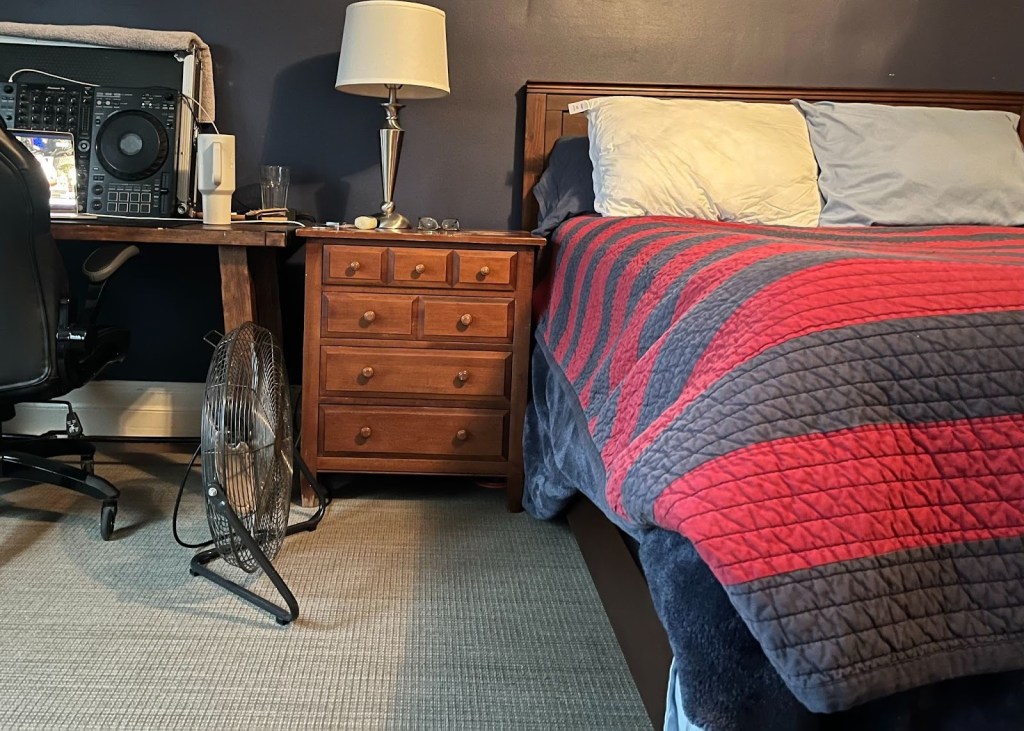
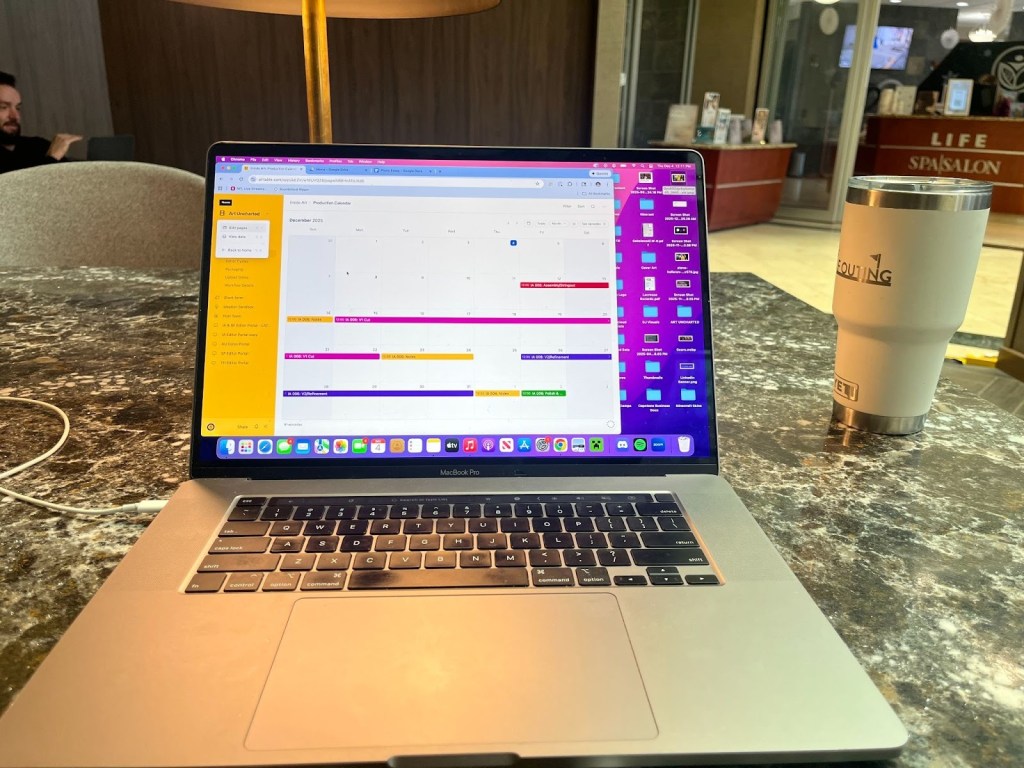
    Welp. This is basically 80% of my existence in this photo. I know it’s only a laptop, sad, right? I don’t have a unique reality. Most of my generation spends the majority of their days looking at a screen. It seems like each year that goes by, we spend more and more time existing in digital spaces. In 2024, I had to learn the hard way that my relationship with technology was greatly limiting me…

    What I didn’t realize then is that my bed and my computer are only separated by the 3ft of the nightstand. The effect this had on me is that my human experience and digital requirements got completely blurred. What was meaningful to me felt completely lost. Our society used to, and many people still do, commute hours to work. I just roll over. 

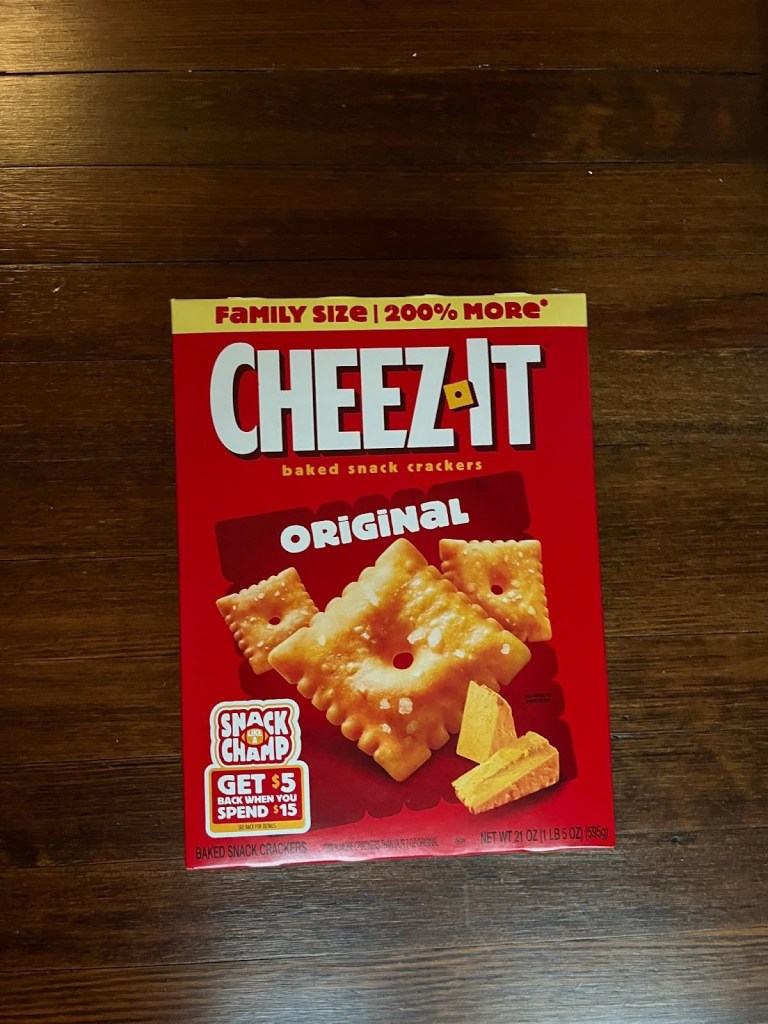
    Now, what do cheese-its have to do with this? I love them. But here’s why they’re relevant to this story: when I find myself around great food, I consistently think about earlier times in history where access to incredible foods like this was rare. In America in 2025, whether you are wealthy or poor, we are inundated with abundance. What could be considered a delicacy in another era can now arrive at our front door.

    With work feet away from bed and access to food no further away than my front door, sometimes it’s easy to forget there’s a whole world outside. Even leaving the house each day, it was easy to forget there is a whole world outside. 

    It feels comical for me to even write this, but sidewalks changed my life. It wasn’t until I began walking every day that I was able to get reintouch with the world outside of my window. Being able to separate myself from work and human necessities helps transition my awareness to a more global perspective. The same insignificant way I walk down the sidewalk is a reminder that everyone is moving through life on their own sidewalk. When I walk, I feel surrounded by all of the life I am entirely disconnected from at my desk.

    So what’s next? What happens if the sidewalk runs out? The excitement of what can be waiting behind the door of discovery is all the more reason to keep moving forward. Whether it’s on a sidewalk or at a desk, I won’t stop moving through life until my last breath. There were many years of my life when I lost the “sidewalk,” but finding it has unlocked a new level to my creativity and new excitement for life that I would not have otherwise.

    Reflection:

    My first goal in writing this story was to identify a through-line for the hundreds of images I took throughout the previous week. Ultimately, in this essay, I aimed to describe how my environment shapes my perspective on the world. In The History of Visual Communication, Elif Ayiter writes, “writing is the essence of visual communication.” Without text to accompany these images, they would have meaning, but they would be disconnected and insignificant to the average viewer. 

    Part of the reason I chose to write this story was the theme I was able to identify. At the heart of my photo essay narrative is meaning and purpose. Richard Buday, author of The Reality of Design Fiction: How Storytelling Can Save the World, writes, “A story, also called a narrative, is an account of things that have happened, are happening, or will happen.” In my essay, I aimed to use photos to describe how meaning and purpose were lost and found in the confines of my environment. This, to me, fits Buday’s description of a narrative. 

    I tried to select images that both told a story with their contents, but also with their color. Based on my topic, this was easy to do. According to the author of 8 Ways to Use Color Psychology, Céillie Clark-Keane, color “evokes an emotional response in your audience, whether they realize it or not.” One of the primary differences in my photos was indoor and outdoor environments. The indoor images were less colorful and bland, while the outdoor images were filled with bright colors.

    There were also a lot of different depth cues on display. One particularly important to supporting the narrative was Relative Size Relationship. I used a photo with a nightstand to display the distance between my bed and desk. The bed is much closer to the camera, so it is much larger in the photo than the other important items.

    In addition to depth cues, Gestalt Principles also assisted the effective communication of the narrative. Specifically, I used the photo from inside the window looking at the sky relies on simplicity. In the frame of the window, the world is bright and colorful, while the walls inside are dark. This directs the eye to focus solely on what’s outside, accompanying the sentiment from the written narrative. 

    I didn’t really expect the Experience Economy to become relevant with my photo essay, but the understanding I gained from the article helped explain one of my photo choices. I used a photo of cheese-its to describe how our economy has yet again shifted. I’m no economic expert, but there definitely is a large chunk of people who are sacrificing experience for convenience. For my narrative, I felt like Cheez-its represented that shift from experience to convenience. 

    Overall, I enjoyed the challenge of creating a story out of my day-to-day experiences through photographing my week. If I were to publish or continue to iterate this story, I would definitely use some different images. I am not a good photographer and I think there are better suited visuals for the story. However, I really appreciate that this narrative is 100% me.

  • What’s Left for Humans to do Better than AI?

    December 2nd, 2025

    As AI becomes more tightly entangled in everyday life, the obvious question isn’t just what can AI do? But what’s left that humans do better? This question hit me hard while watching an interview on Neil DeGrasse Tyson’s Star Talk (podcast) with philosopher and cognitive scientist David Chalmers.

    The truth is, we don’t know how our relationship with this technology will play out. Many experts believe there is catastrophic potential for this technology, so I want to know:

    1. What do humans still do better than AI?
    2. What will humans do better than AI in the future?
    3. How do we live in harmony with this technology?

    On Star Talk, Chalmers’ discusses his recent research on consciousness and AI. Where these two fields meet is at the heart of the questions I aim to answer. 

    Understanding the combination of AI and consciousness is essential to understanding where we humanity will be in the future. To discuss this, I think it would be helpful to define two things.

    Objective: “expressing or dealing with facts or conditions as perceived without distortion by personal feelings, prejudices, or interpretations.” 

    Perception: “understanding or interpretation of physical sensation.” In other words, lived first-person encountering of the world through interpreting, feeling, imagining, etc.

      AI performs objectivity at an extremely high level. Given enough data, it can recognize patterns, generate options, and observe in ways that are more consistent and less biased than an individual human. 

      Perception is different. Perception isn’t just taking in information; it’s inhabiting it. It’s our personal construction of reality. It’s the irrational ways we experience the world. This is where humans still have a comparative advantage. What is life? What is our purpose? Our perceptions define those and AI is a tool to help us shape our beliefs into reality.

      I don’t doubt that AI will accelerate humanity’s evolution through its powerful objective understanding. We opened a kind of Pandora’s box. To me, many economic, social, and technological trajectories now seem to be locked in by AI’s presence. But that doesn’t mean we’ve lost all agency to create the future. Our edge lies in how we perceive these trajectories.

      Through perception, humans can still dream a different dream. 

      We don’t understand consciousness deeply enough to know the full extent of its power and where it comes from. But we do have frameworks that help us turn our perceptions into something actionable, rather than thoughts floating around our conscious minds.

      This is where design fiction enters.

      Design fiction expert Richard Buday writes, “There is a long tradition of sorcery making the implausible plausible, the imaginary real and reassuring. Treating the far-out like it’s around the corner isn’t hard.” It’s easy to see that truth through the presence of technology in society today.

      Many people have old relatives that can’t sign into her email without assistance. Now, imagine teaching someone from an ancient culture how to use AI. This technology is so absurdly powerful that in some contexts, it doesn’t feel like it’s from Earth. But AI isn’t alien at all. We’ve been imagining systems like it in stories for centuries.

      Buday argues that design fiction is “using fiction to test the use and acceptance of unusual designs.” In other words, we create narratives, artifacts, or worlds where imagined technology already exists, and then we watch what happens in that imaginary space. 

      So that brings me back to my big questions:

      1. What do humans still do better than AI?
      2. What will humans do better than AI in the future?
      3. How do we live in harmony with this technology?

      The truth is I don’t have any sort of authority or expertise to be able to answer those questions. But what I do know is how we designed the future we currently live in [aka the present]. There are many tools that designers can use to create a better and brighter future. 

      Here are two tools designers use to actually shape possible futures:

      Scenario planning:

      Although it may seem trivial, creating a range of variables and then envisioning different futures based on those variables, in an organized and intentional focus, can help you prepare better for the future.

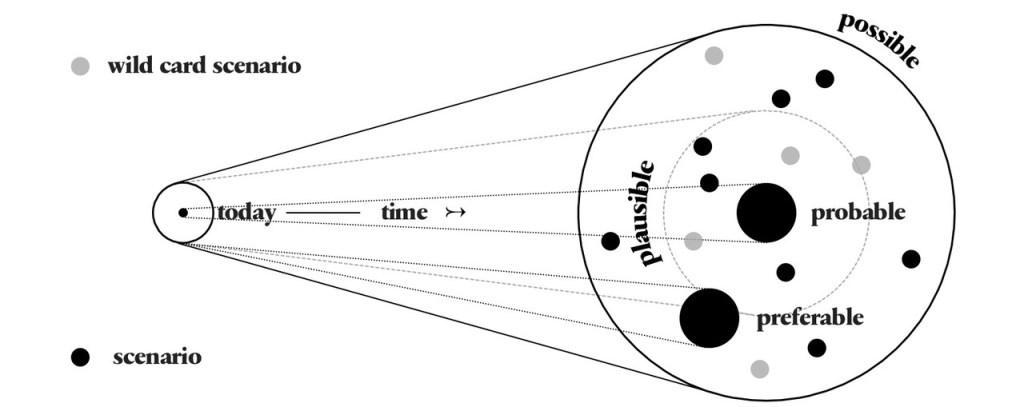
      The cone of plausibility:

      This is a conceptual model used in that be used in conjunction with scenario planning and helps users visualize a range of possible futures. The primary understanding that the visual enforces is that as time increases, so does the number of variables impacting your ultimate goals.

      With humans’ perceptive capabilities used in conjunction with the objectivity of AI the future we can imagine is limitless. It was not long ago that televisions entered the home and those people couldn’t have possibly imaged that one day we’d be walking around with mini-televisions in our pockets. I am excited to see what unimagined futures AI and humans will imagine together and inject into reality.

    1. Why We Click: Behavioral Economics Hidden in YouTube Titles and Thumbnails

      November 18th, 2025

      Before there was doom-scrolling on the likes of Instagram and TikTok, there was another social media platform that would trap users for hours in a loop of consumption. YouTube! There’s one main difference between YouTube and the doom-scrolling apps that enabled YouTube to escape the negative connotations of doom-scrolling. 

      Instagram and TikTok are scroll-based platforms where content plays automatically, while YouTube is a platform that requires users to select content before they view it. Since the algorithm on YouTube isn’t directly feeding content to users, creators need to have a heightened focus on behavioral economics so they can understand when, why, and how their videos get clicked on. 

      So what do you focus on?

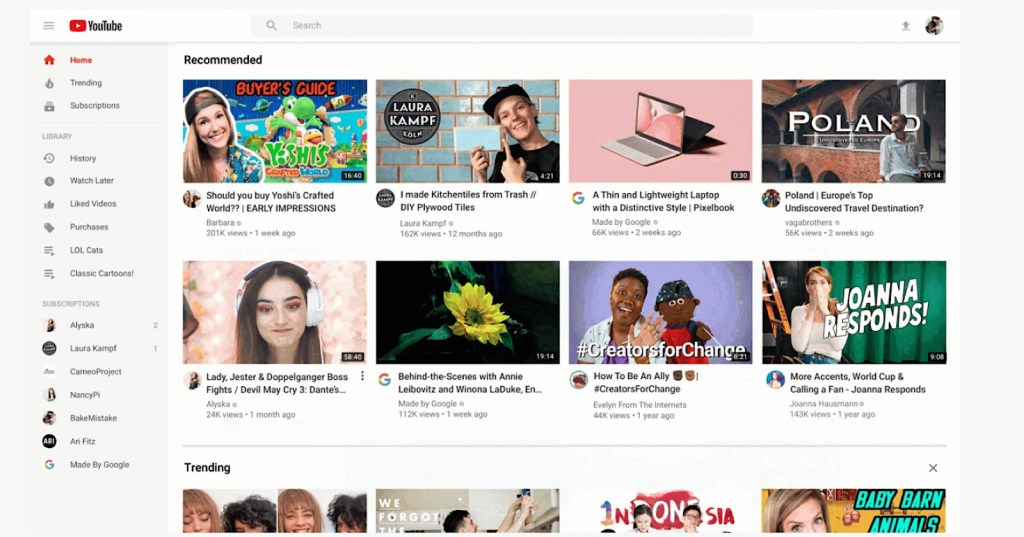
      According to Colin and Samir, a content-creation duo that specializes in creating content for other creators, “YouTube is a click-and-watch platform.” This means that as a creator, the number one thing you need to be good at on YouTube is getting people to click. The medium for getting users to click is title and thumbnails (pictured above). 

      So the real question is, how do we get people to click? 

      In order to do this, we want to understand the behaviors of all potential viewers and the reasons they make any decision in the first place. Bridgeable, a service design consultancy, puts its focus on Behavioural Economics. They state, “Behavioural Economics (BE) is a field of study that seeks to understand how people make decisions by examining psychological, behavioural, emotional, and social factors.” Let’s not get confused by the bells and whistles of the internet; we are dealing with human decision-making, and that’s something we know a lot about. By applying behavioral economics, we can better design titles and thumbnails to invoke specific feelings and get users to click. 

      According to Bridgeable, “There is more to decision-making than simply providing accurate information and expecting people to act on it accordingly.” On YouTube, this means that having valuable/meaningful content is not enough. If you spend a great amount of time focussing on making a high quality video that does not automatically earn clicks and views. 

      Now here’s where things get highly competitive. YouTube users aren’t making a choice of do I or don’t I want to watch this specific video. They are making a choice between 8-12 different pieces of content on their screen and they only get to click one. 

      According to Akna Marquez, a design expert writing on sensory design, “Instead of limiting ourselves to a result that merely looks good and functions properly, we can introduce elements of power to communicate and seduce the user.” In the context of competing against other title/thumbnail combinations, stepping beyond mere function can create a competitive edge and help you reach more viewers. 

      Here in lies another challenge, how can you know your design will have the intended effect on users? The truth is you can’t. Bringing back BE (behavioral economics) to the equation, Bridgable claims, “BE says that people are irrational — meaning there is more to decision-making than simply providing accurate information and expecting people to act on it accordingly.” This is a major challenge for creators in the space. With each piece of new content that is published, there is no guarantee for success.

      The development team at YouTube is well aware of this problem, so they came up with a genius tool to eliminate part of the guesswork for creators. 

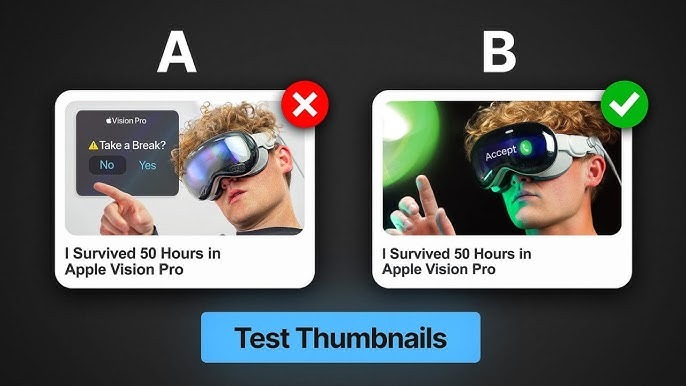
      YouTube added a feature called A/B testing, which allows creators to publish two different thumbnails for one piece of content. YouTube then tests the thumbnails within your audience, and after 60 minutes, the thumbnail that leads to the highest retention rate for viewers will be set as the official thumbnail. 

      This is an awesome example of technology being used to help bridge the gap between the known and unknown when it comes to behavioral economics!

    2. Why We Live in an Experience Economy

      November 12th, 2025

      Back in 1998, in the Harvard Business Journal, authors B. Joseph Pine II and James H. Gilmore describe what they call the experience economy. This provides an exceptional timestamp in history, marking a global transition in the way we buy, sell, and consume products. Pine and Gilmore break down the history of economies into how people utilize commodities, explaining how it led to the eventual manifestation of the experience economy. 

      What is the experience economy? It is an economic model where businesses focus on creating a memorable experience for customers through design. 

      In 2025, it can be hard to understand how truly revolutionary this kind of thinking was. Today, nearly every space we enter, product we interact with, or purchase we make, each step of the process is carefully designed to invoke specific emotions. The depth of understanding we have around human psychology and our ability to manipulate environments make the establishment of the experience economy absolutely irreversible. As a species, from the moment we are born to the moment we die, we are in a state of experiencing. 

      The information we have and our ability to manipulate our environments are only going to grow in the future, and thus, everyone’s ability to create experiences will improve. However, the key to the experience economy is that it needs to be a memorable experience, and it is going to be more competitive than ever to create a lasting memory. 

      So how do you do it? 

      One of the most important tools designers use is Personas. According to Nielsen Norman Group, a team of research-based UX experts, “Personas support user-centered design throughout a project’s lifecycle by making user groups feel real and tangible.” At the start of any project, you have to ask, “Who am I designing for?” Personas offer a systemized way to account for the different potential users and how they will interact with the product. 

      Here’s a list of typical information a Persona will include:

      • Age
      • Gender
      • Other Demographics
      • Location
      • Education
      • Needs
      • Goals
      • Pain Points
      • Behavior Patterns

      Once you identify who and why people will be experiencing your product, then you can begin to design the environment to support business goals. For example, 

      Color choice, for example, is a very impactful element of the design. According to The Next Web, a tech-based media company, “they [colors] have a definite influence on the design as a whole — from communicating contrast or similarity, to evoking precise emotions.” The more design decisions that are made to create synergy between the user, their goals, and how they interact with the product, the more powerful the relationship user and the product will become. 

      While color can have a dramatic impact on users, it is just a small piece of the puzzle, considering all of the other design decisions that are needed. 

      Let’s take font choice, for example, too. The usage of fonts and how humans interact with them exposes a fundamental characteristic that differentiates humans from all other animals and reveals a deeper insight into how humans interact with the physical world. Envato, a digital assets company, claims, “Human beings have an innate instinct to anthropomorphize non-human entities, applying human characteristics and emotions to things that are distinctly non-human – such as logos, for example.” By applying human characteristics to non-human entities, the non-human entities can become an extension of the mind, and thus a part of the human. 

      Truly incredible design does exactly that. 

    3. Why Visualization is so Powerful

      November 2nd, 2025

      If you want to understand today’s complex media environment, a focus on what is fundamental to media is essential in understanding how and why humanity uses these tools. The History of Visual Communication claims it is “no overstatement when we say that writing is the essence of visual communication and by extension of visual communication design.” So if writing is the essence of visual communication, the real question is, what is the essence of writing?

      Walter J. Ong, author of The Written Word, claims writing is a technology that reorganizes consciousness — separating words from the present moment. The key is that there is a separation from the present. For visual communication, this is no different. Whether it is a photo, an infographic, or another form of visualization, its creation separates it from the present, only achieving meaning if it is observed once more. 

      Something we’ve lost in the age of the internet is the ability to discern what moments are truly worthy of capturing. There’s no right or wrong moment; however, social media has driven us to simultaneously over-share and over-consume, blurring the lines of what is significant. 

      Image Source

      A seemingly terrible situation has created a smile. But why? This is a photo from Bonnaroo, a music festival in Knoxville, Tennessee. In 2025, the festival had to be cancelled due to heavy rain. That didn’t stop the fun!  As you can see, this woman is surrounded by a sea of mud and a wall of mud-covered legs. The festival goers were able to share a moment of joy despite the bad news. 

      Image Source

      In the last photo, we looked at a moment that went from bad news to unexpected joy. This photo demonstrates a different perspective of what visualization is capable of. Whether you consider it a split second or an eternity, this surfer has redefined what is humanly possible. In perfect harmony with his board, he defies gravity and floats above the waves. 

      Image Source

      In professional football, the journey to winning the Super Bowl is commonly compared to climbing Mount Everest. The season is far too long with far too many ups and downs for everything to go to plan. To make it to the top of the mountain is nothing short of a miracle. The mere existence of this photograph is a testament to that truth. The joy within this photo is undeniable, and every arm is outstretched to get their first touch of the top. 

      Image Source

      This is the first photo in the collection that doesn’t appear to be entirely candid, but does that remove its value? Absolutely not. This photograph has the strongest sense of character in the group. Mike Montalto, a design and storytelling expert, claims that characters are 1 of the 4 principles of visual storytelling. Montalto writes, “Remember, stories that make an impression feature memorable characters readers and viewers can identify with.” To me, the sense of individuality that is expressed through the character in this image jumps off the screen. 

      Image Source

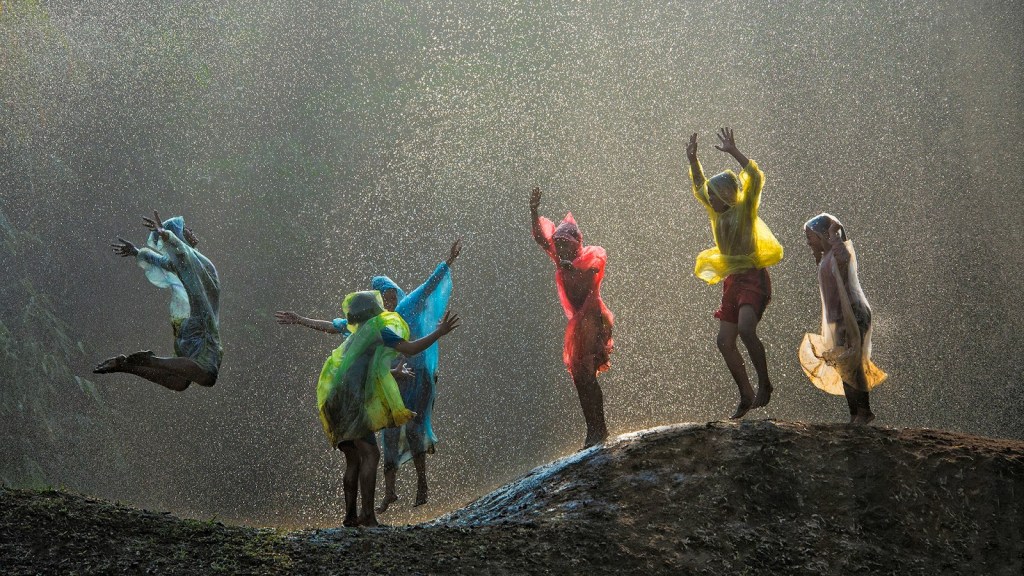
      Once again, the question of authenticity is invoked by this photograph. The number one thing that indicates is the color selection of each poncho. Each poncho is its own, just like the children who wear them. This is a representation of an ideal reality. The absence of color in the background and foreground of the photo surrounds the colorful joy of the children and emphasizes their importance. 

      Image Source

      Here we have another demonstration of the importance of context that can be provided through examining the background and foreground. Up close, the volcano is powerful and dangerous. But in the context of the stars in the sky, it is merely a small part of the earth, just like the trees it stands next to. 

      Image Source

      We examined humans and nature through photography, but what can these penguins teach us? The moments experienced by these animals are just as significant as those in human life. However, the penguins, and nearly all animals for that matter, will not get to experience observing the photograph. 

      Humans, as the controllers of this powerful visualization technology, have a responsibility to document animals as a time capsule to exhibit who and what we share this life with.

    4. The Beginning of My YouTube Journey

      April 27th, 2025

      My Welcome to YouTube

      I’ve only been doing YouTube in a professional setting for three months… And WOW have I learned a lot! 

      But, I want one thing to be clear about my blog space: my observations about this platform come from a place of experience, not expertise. It is important to distinguish my POV as someone who is actively producing and engaging with this space. I don’t know the secrets, and I haven’t reached any level of mastery. However, that is not to take away from the information I share here. 

      I am in the pursuit of mastery. And this blog is for documenting that very pursuit. 

      How to Find Success on YouTube

      The #1 thing that I have learned about YouTube is from Colin and Samir, a content-creation duo that specializes in creating content for other creators. 

      “YouTube is a Click-and-Watch platform.”

      What does that mean? It means the name of this game is titles and thumbnails. At its core, YouTube isn’t about making the best content or building an audience. It is about getting people to click on your video. None of what you do matters if people to not click on your video. The lesson from this perspective is that the ideation process and how creators ultimately package their content are more important than the content itself. The immediate context and information that the title and thumbnail provide users is what makes them click the video, and if executed at a high level, the combination will make them engage with the video long enough to be hooked by a new element of the production. 

      Perhaps calling ideation, title, and thumbnail more important than the content itself is a stretch. But not to Colin and Samir. They claim creators “have to live 75% towards distributor” when considering the balance between artistry and distribution as a creator. 

      Play the Game Not the Sport

      Coming to my own understanding of this topic, I see the immense value in honing the ideation process. Without a succinct and immediately accessible framing of the topic being covered, we limit our potential for success. 

      In the sport of lacrosse, one of the most valuable lesson I ever learned was to “play the game, not the sport.” A lot of times in life, we get caught up in the big picture, and our decision-making ignores what is directly in front of us. It’s not enough to say let’s make stunning and impactful video content, you have to be willing to play the game that YouTube has set before you. 

      With the current landscape of YouTube, ideation, title, and thumbnail has to be the game you commit yourself to playing to find broader success in the sport of YouTube. 

    5. I Worked with an NBA Player

      April 27th, 2025

      Who is Pat Spencer?

      Imagine being a #1 overall draft pick in the sport you played for your entire life. The accomplishment, validation, money, fame, etc., everything you’ve ever worked for comes to fruition in a single moment. 

      Now… imagine being the #1 overall draft pick and deciding to leave it all behind before setting foot on the field. 

      Well, that’s exactly what Pat Spencer did. After racking up one of the best statistical careers of all-time, Pat was the first overall draft pick in the 2019 Premier Lacrosse League draft. Then, before ever suiting up, he decided to leave the sport of lacrosse behind in pursuit of a bigger dream. 

      Why Now?

      That was all the way back in 2019, so why tell Pat’s story now? It’s because he achieved the real dream he was after. After playing 4 years of college lacrosse, Pat retrained his body and mind to be an elite-level basketball player. How elite exactly? He received a full NBA contract from the Golden State Warriors in March 2025.

      In partnering with Pat to make this video, we wanted to reintroduce him to the lacrosse world, tell his story, and integrate an advertisement for ChillShark, a start-up venture that Pat is a partner in. The primary reason this video was produced was because of ChillShark. Normally, having an advertisement be the primary reason for production would be a red flag. However, considering Pat doesn’t use social media, the news of him receiving a full NBA contract, and that he has not done any interviews with lacrosse media, we knew that our video would provide lacrosse fans an exciting way to reconnect with Pat. 

      What I am most proud of from the production process of video is the discover of an interview Pat did during college. In the older interview, Pat was asked what he wants to do when he grows up, and he said, “I want to start my own company.” We used that clip in our video to be our first introduction to ChillShark. For our interview, we asked Pat if he remembered what he said all those years ago. He first guessed he said NBA player, but when he found out that was wrong he immediately knew it was related to entrepreneurship. 

      There’s an authenticity in the What & Why of this product which aligns perfectly with our own mission. Our brief partnership with Pat in this video isn’t some influencer-based money grab. In hindsight, what gave us the greenlight to pursue this, is that Pat’s story is worth telling with or without the involvement of ChillShark, so we were confident we would create a positive fan experience. 

    6. Creating v. Capturing Content

      April 21st, 2025

      The Theory

      This is an interesting dynamic to consider: Which is more important, creating content or capturing content? On the one hand, creating content uses the medium as a canvas for artistic expression. On the other, capturing content provides a uniquely authentic way of documenting human experience. 

      Our Strategy

      As the role of a producer for a content creator, I see it as my job to find a way to create spaces for self-expression while combining ‘captured’ moments to add supporting authenticity to the topic at hand.

      Currently, our channel is focused on growing the sport of lacrosse. We use many different strategies within our content to do this. Our most consistent form of content is 20-minute documentaries on college, club, and high school lacrosse programs. These do a great job of displaying the time, effort, and resources that top programs are pouring into the sport. Nevertheless, they don’t offer much intrigue to people who aren’t already fans of the sport.

      Unfortunately, and rightfully so, the stereotypes of lacrosse players are overwhelmingly negative, so it has been hard for creators to capture the off-the-field personalities of the sport. Thus, authenticity has been a challenge for creators to capture without the use of satire. 

      How it Played Out

      The following video is an attempt to blend content creation and capturing content. To focus on capturing content, we wanted to find a way to assemble a broad range of never-before-seen lacrosse personalities. The format we landed on was ‘Hiring a lacrosse player from the internet’. Our overarching narrative was to train a complete stranger who’s never played lacrosse goalie and ultimately have them compete against a D1 athlete. 

      To do this, we put out a Google form to 80k Instagram followers and selected 6 strangers to conduct interviews with. The interview portion created a great opportunity to capture authenticity. From a production perspective, the most valuable thing we did for these interviews was to send a series of unusual questions to the interviewees. 

      Pre-Interview Questions

      1. What is the largest meal you’ve ever eaten?
      2. What is your strangest habit or fixation?
      3. What is no one else in the world better at than you?
      4. Describe the best night out you’ve ever had?
      5. Who is the BEST goalie of all time? WHY?
      6. When was the last time you cried?
      7. If you were a frog, what kind of frog would you be and why?
      8. What is your best middle school memory?
      9. Describe your approach to academics.

      There was a wild range of answers to these questions. My favorite answer that didn’t make the final cut of the YouTube video is the following:

      Question: When was the last time you cried? 

      Answer: “I was watching Guardians of the Galaxy 3 and the flashback scenes with the baby raccoon caught me off guard. I will say that I was watching with a friend who had the waterworks flowing and I was doing okay, but I could only keep it together for so long.” The deeply personal nature of this question, combined with vague instructions, led the participants to share a lot of unexpected information. 

      Check out the full version: “I Turned a Stranger to a D1 Goalie!”

    7. Music for the Future

      March 31st, 2025

      The only thing more important than what we do is why we do it.

      Ugh. I know what a terrible blanket statement. But it’s true! Well, at least I believe it. 

      My most exciting experience as a creative human was the realization that fundamentals always find a way to translate. It doesn’t matter what it is, I believe that [Why > What] is a fundamental for creative endevours. Why do we do what we do? Do we go to work for a check, passion, or security? Do we create art for profit, personal discovery, or support of others? Of course there is no right answer, but our ‘why’ will always have a significant impact on the final product of what we produce. 

      Let’s discuss this fundamental using the music industry as an example. An artist’s ‘Why’ for releasing a song is such an essential element for connecting with your audience. The systemized nature that it takes for artists to sustain a relevant social presence through content creation and constant music releases has led to an overall disingenuous market. Large labels want to use the power of social media algorithms and expert-designed content to ultimately feed streams/listens to their artist’s music. The other layer to consider is that it’s not just the social media content, but the industry standard is to release music designed to maximize streams (i.e. an instant catchy hook so listeners reach the required playtime to = a stream, shorter song length so listeners play more songs overall, and much more). The ‘why’ for many artists in this current day and age is the pursuit of achieving platform metrics whether it’s likes, streams, follows, and more. 

      I was born in 2000, so by the time I was listening to music for myself, the music industry was in the middle of transitioning from music downloads (ex. iTunes) to music streaming. No matter what the platform, my primary interest was always using the platform to discover artists and songs I had never heard of before. 

      Little did I know, this set the foundation for my lifelong relationship with music. In my 20+ years of listening to music, only in the past 2 years has one genre in particular emerged as the supreme genre to me. 

      EDM. Electronic dance music. I have always had an affinity towards EDM, but only til I recognized the key fundamental about it did I realize why. EDM is music that is designed to make people dance. This form of music has a built-in ‘why’ for artists. It doesn’t matter what your external goals are, if the song doesn’t make listeners want to dance it’s simply not dance music. This form plays perfectly into my foundation of music discovery. What it takes for these artists to be successful is to create a unique musical experience that incites movement. Of course, streams and social media relevancy matter, but it is not the primary driving force behind the production of this kind of music.

      My pursuit of DJing has ultimately become about sharing the most current and exciting dance music with the goal of creating a totally unique experience for those who listen to my mixes. This mix below is my first public posting of a DJ set which I designed to sound like the future of music. Each individual note, bar, and song has been carefully selected to be musically compatible with one another while maintaining my external goals to incite dance and represent sounds of the future.

      Listen to my mix here:

    1 2 3 … 6
    Next Page→

    Blog at WordPress.com.


    Loading Comments...
     

      • Subscribe Subscribed
        • Getting to Know Stolen Focus
        • Already have a WordPress.com account? Log in now.
        • Getting to Know Stolen Focus
        • Subscribe Subscribed
        • Sign up
        • Log in
        • Report this content
        • View site in Reader
        • Manage subscriptions
        • Collapse this bar