Introduction:
Our goal with this project was to develop a digital experience for teenagers that educates them on personal finance. The aim was to take a subject that is under-taught to teens and present it in an engaging and accessible fashion. Our team, including myself, was made up of 3 members of the Interactive Media and Communication (ICM) program at Quinnipiac University. To design this product, we conducted a non-traditional design sprint over the course of 5 weeks. Over that time, we designed and prototyped a mobile game called FinGrow, which combines a virtual world with video lessons and mini-games to increase teenagers’ financial literacy and knowledge.
Sprint Overview:
For this design sprint, we met once a week for 5 weeks, simulating a traditional 5-day design sprint.
Phase 1: Following the sprint facilitation guidelines, we discussed the minimum viable product (MVP) for the application we wanted to develop. Following this, each team member conducted brief research on existing applications, mobile games, and finance topics. We presented our research to the group and we agreed on inspiration for leaderboards, in-game currency, avatar customization, and more.
We individually completed the 4-step sketch exercise. We used the notes from our research as our inspiration for our sketches. The first three steps eased us into the final one where each team member sketched a proposal design for the main screen of the app. This process helped us narrow down what game concepts and educational elements were most important to the app.
Phase 2: We uploaded our sketches and ‘solution sketch’ to Miro, a digital collaboration platform. Through presentation and discussion what we examined each team member’s sketches. This helped our voting, as we identified the our favorite proposal and then two individual game elements from the sketches that we would use as our foundation moving forward. Having a more sound basis for the app, we each created a 6-step ‘user flow’. This detailed what some most important steps in the path of the user, impacts from the game, and overall experience of using the app. For example, “user is financially literate and having fun while learning.” Although this is a simple statement, this is something foundational to the product we are designing, and clearly identifying it will help us maintain those criteria through further development.
Phase 3: For this next phase we had enough concepts and details agreed upon to create a prototype. The team created the prototype using Figma, an interface design collaboration platform. It is important to understand the purpose of the prototype going into designing it, and its relevance to the purpose of the sprint. Moving from concept to prototype in just two phases is not a lot of time. However, one of the main purposes of a design sprint is that product development can be easier when the product is testable. Traditionally it could take a large amount of time and resources to get to a point where the product is testable. By jumping right to the point of having a testable prototype it helps the design team focus on the most important elements to the user, thus making a better user experience. What the design team needs to understand is that because they are creating a prototype in such little time, they should aim to create a simulation or a facade because creating a real product is not feasible. The details of what to include have already been documented and agreed upon through sketching and user flows. The team worked together through out the week designing each page and interactive element within the application prototype on Figma.
Phase 4: At this point the prototype was in a testable place in development. It included an interactive main city, mini-games home screens, avatar customization, video lessons and quizzes, leaderboards, a friends-list, and user settings. Each team member scheduled a user test where user navigated the prototype, took notes on their experience, and answered a series of questions.
Phase 5: Using our documentation throughout the process of the sprint the team compiled a sprint report which outlines our step-by-step process of designing FinGrow from conception through testing.
The problem statement of this design sprint was to design an interactive experience for teenagers that educates them on personal finance. Similar to the way that social media platforms focus on maximizing the amount of time users are on the platform through algorithms, our team wanted to determine design elements that would maximize the time that users would be on our application through curating specific game elements. The thought process behind this is that the longer users are on the app, the more they will learn about finance which will get them closer towards the ultimate goal of financial literacy. That mindset combined with our research on existing mobile games and finance education inspired the social elements like the friends-list, avatar customization, and leaderboards. The goal was to give users added social value outside of the application through in-game competition and personalization. Our team’s approach was to design an experience that gave the user everything that they could want in a mobile game based on the base features while not sacrificing fun for education.
Sprint Activities:

Lightning demos: team members presented research based on current market solutions and other inspiration

Sketch Exercise: Each team member completed the 4-step sketch exercise, ultimately creating a ‘solution sketch’ which they would go on to present next meeting.
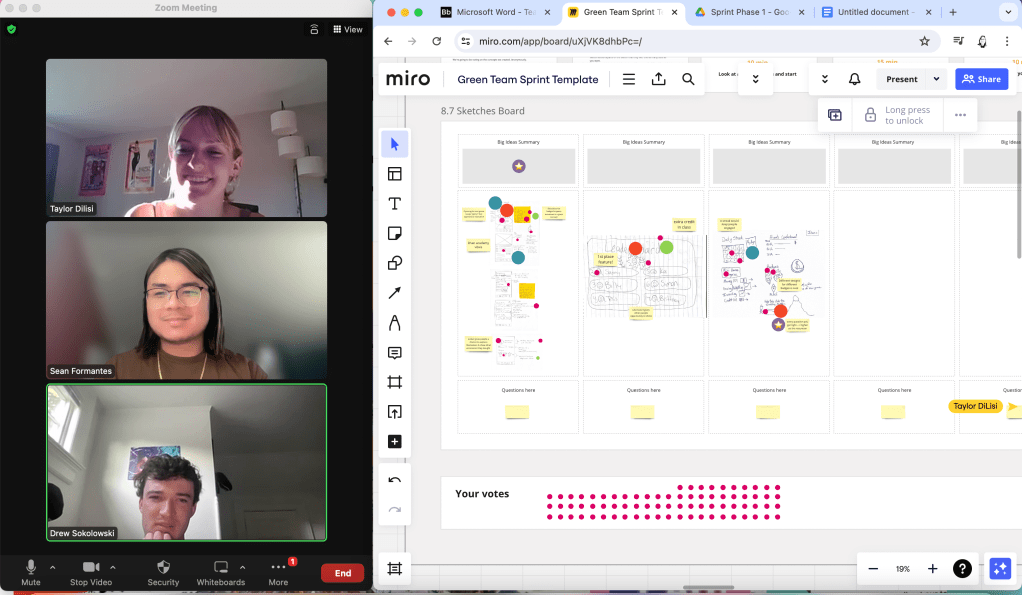
Speed Critique & Voting: Through presentations and voting on Miro, the team decided on their favorite of the three solution sketches and two design elements they would like to incorporate going forward.
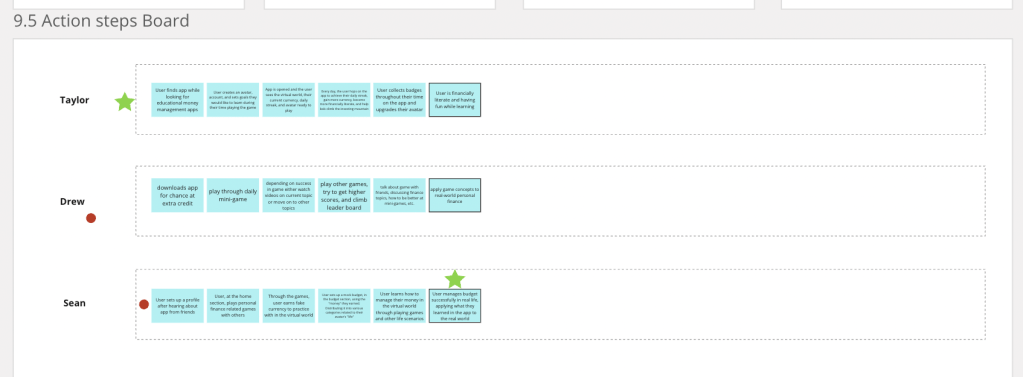
User Flows: Using our sketches as inspiration, we each created a 6-step user flow. Following, we each presented what we made and voted on our favorite one.
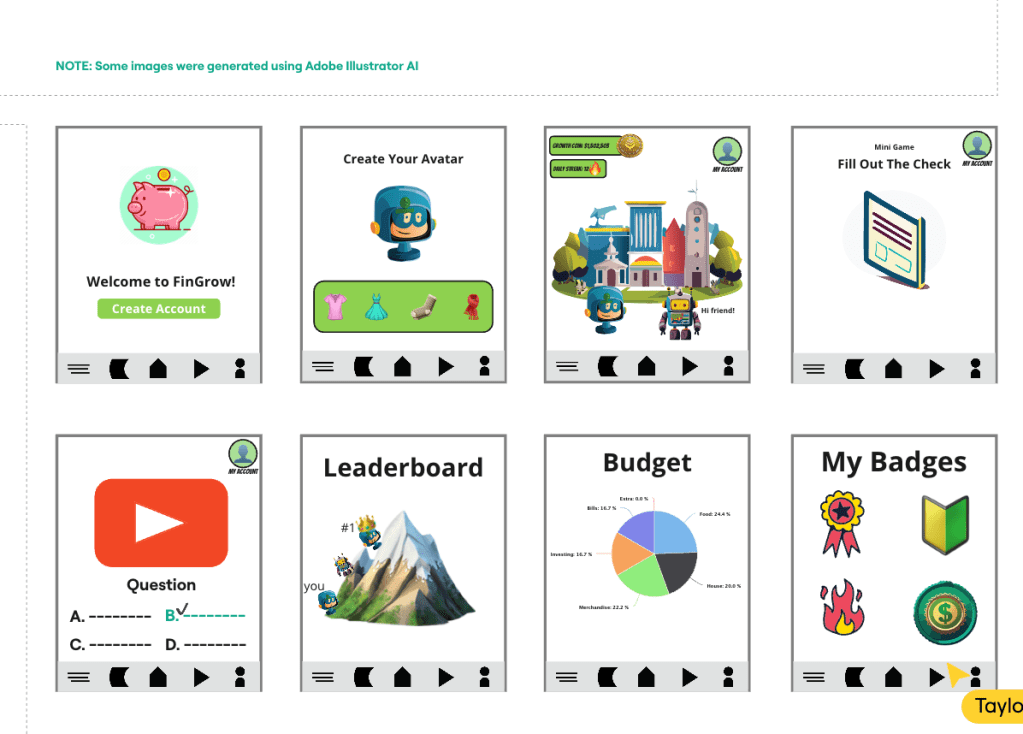
Storyboarding: Based on the user flow we voted on, the team collaborated on Miro to make the storyboard. This served as the basis for the prototype in the next phase.
Prototyping:
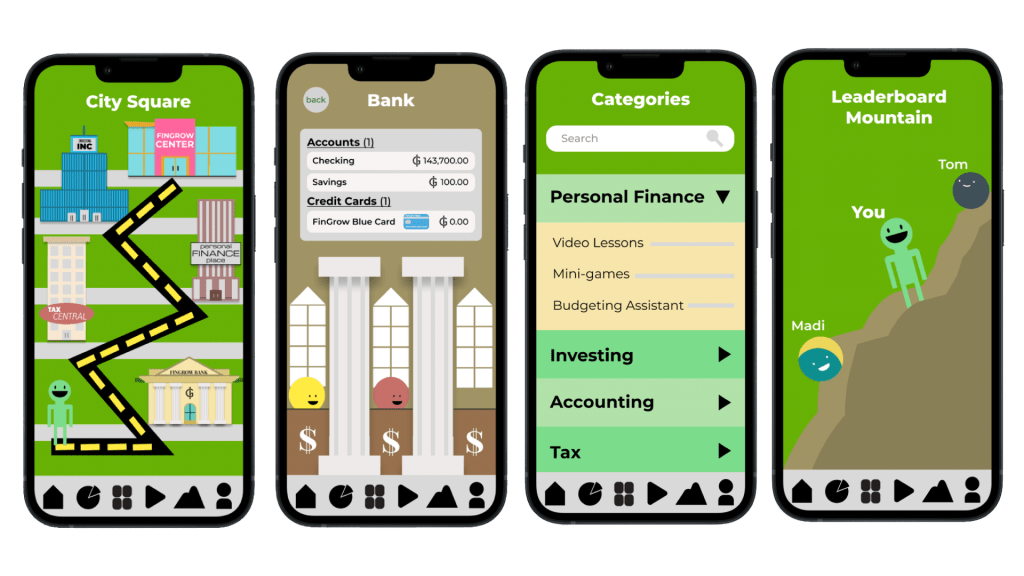
Using Figma, the team divided up tasks and created the first prototype of FinGrow. The focus was on creating the general interface that users will use to navigate through the app.
Testing:
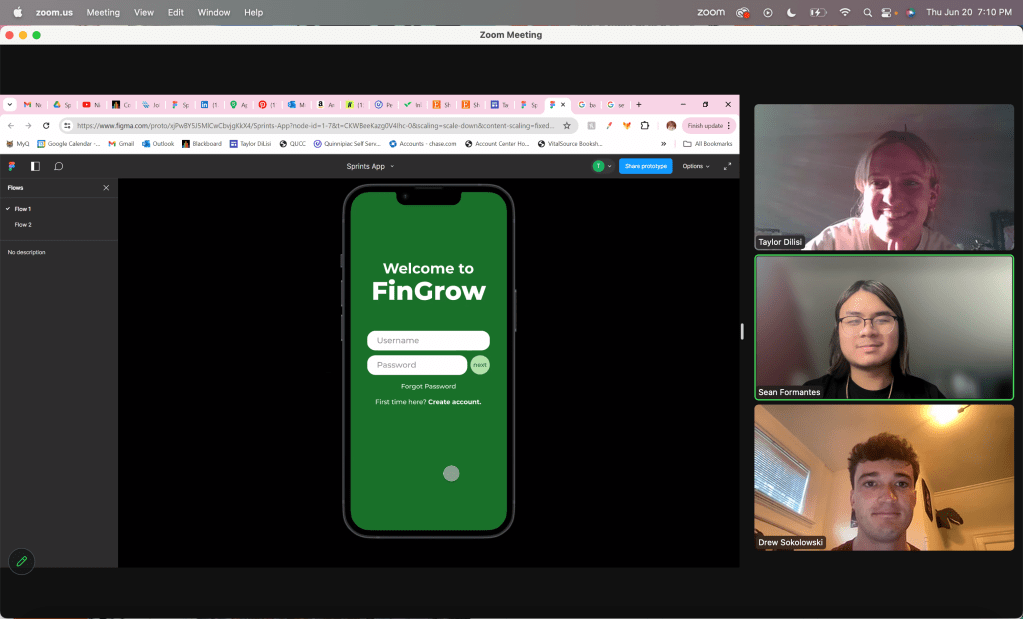
Each team member conducted their own test of the prototype with an interviewee. Users took notes while clicking through the prototype and then were asked a series of questions about their experience.
Results and Outcome:
The primary feedback that we received from testing was that users were easily able to navigate and interact with the prototype interface. Based on the interface, text, and designs they were able to intuitively make sense of the prototype and game concepts. All 3 users from testing said they would’ve liked to see a more cohesive theme throughout the application.
Conclusion:
Overall, the design sprint was run smoothly. Each team member was prompt and a strong contributor during our virtual meetings. All work was completed on time and up to our standards. Based on the sprint process and our results from testing, it is clear we need to further develop the individual mini-games, create a curriculum for the video quizzes, make a more detailed theme throughout the map. Our Team was able to accomplish a large amount in a short period of time through virtual meetings and collaboration platforms. We created a strong foundation for a mobile application that has a clear purpose and direction for further development. By playing to each other’s strengths and approaching each sprint phase with an open-mind it led us to create a product that includes each team member’s perspective.





 Getting to Know Stolen Focus