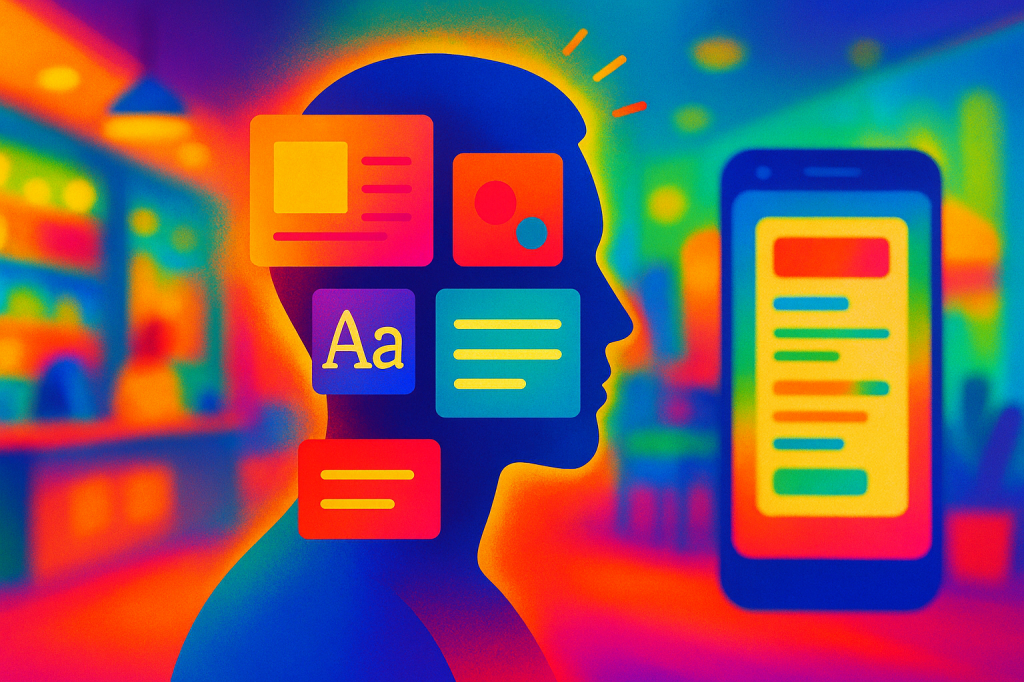
Back in 1998, in the Harvard Business Journal, authors B. Joseph Pine II and James H. Gilmore describe what they call the experience economy. This provides an exceptional timestamp in history, marking a global transition in the way we buy, sell, and consume products. Pine and Gilmore break down the history of economies into how people utilize commodities, explaining how it led to the eventual manifestation of the experience economy.
What is the experience economy? It is an economic model where businesses focus on creating a memorable experience for customers through design.
In 2025, it can be hard to understand how truly revolutionary this kind of thinking was. Today, nearly every space we enter, product we interact with, or purchase we make, each step of the process is carefully designed to invoke specific emotions. The depth of understanding we have around human psychology and our ability to manipulate environments make the establishment of the experience economy absolutely irreversible. As a species, from the moment we are born to the moment we die, we are in a state of experiencing.
The information we have and our ability to manipulate our environments are only going to grow in the future, and thus, everyone’s ability to create experiences will improve. However, the key to the experience economy is that it needs to be a memorable experience, and it is going to be more competitive than ever to create a lasting memory.
So how do you do it?
One of the most important tools designers use is Personas. According to Nielsen Norman Group, a team of research-based UX experts, “Personas support user-centered design throughout a project’s lifecycle by making user groups feel real and tangible.” At the start of any project, you have to ask, “Who am I designing for?” Personas offer a systemized way to account for the different potential users and how they will interact with the product.
Here’s a list of typical information a Persona will include:
- Age
- Gender
- Other Demographics
- Location
- Education
- Needs
- Goals
- Pain Points
- Behavior Patterns
Once you identify who and why people will be experiencing your product, then you can begin to design the environment to support business goals. For example,
Color choice, for example, is a very impactful element of the design. According to The Next Web, a tech-based media company, “they [colors] have a definite influence on the design as a whole — from communicating contrast or similarity, to evoking precise emotions.” The more design decisions that are made to create synergy between the user, their goals, and how they interact with the product, the more powerful the relationship user and the product will become.
While color can have a dramatic impact on users, it is just a small piece of the puzzle, considering all of the other design decisions that are needed.
Let’s take font choice, for example, too. The usage of fonts and how humans interact with them exposes a fundamental characteristic that differentiates humans from all other animals and reveals a deeper insight into how humans interact with the physical world. Envato, a digital assets company, claims, “Human beings have an innate instinct to anthropomorphize non-human entities, applying human characteristics and emotions to things that are distinctly non-human – such as logos, for example.” By applying human characteristics to non-human entities, the non-human entities can become an extension of the mind, and thus a part of the human.
Truly incredible design does exactly that.
 Getting to Know Stolen Focus